


Arabian carpetsharks are found in the western Indian Ocean, in the Arabian Seas region, from the Gulf to Pakistan and India, at depths between 2 to 100 m (6.6–328 ft). They inhabit shallow coastal waters including coral reefs, lagoons, rocky shores, muddy bottom and mangrove estuaries.
Biology and Behaviour
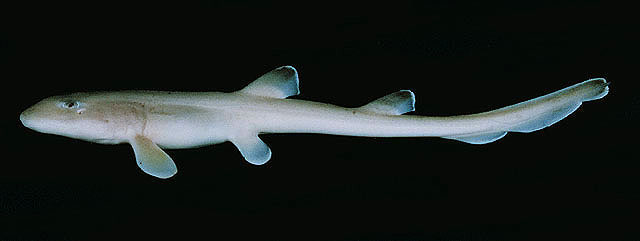
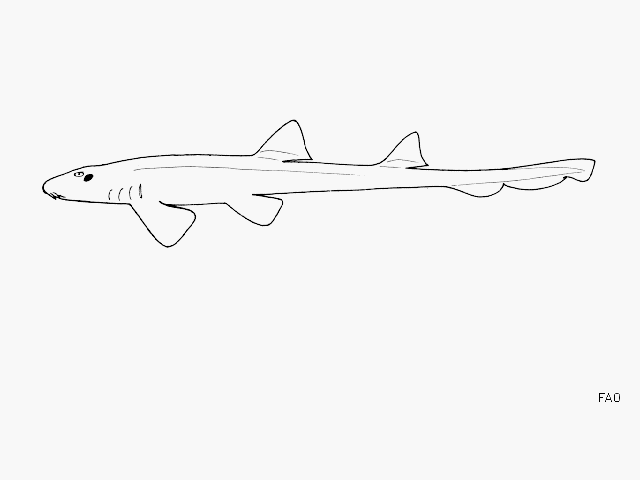
Arabian carpetsharks have their mouth well in front of their eyes with big spiracles below, and they have a long, rounded snout. Their spineless dorsal fins are equal-sized, and they have a long precaudal tail, and their anal fin is long placed low. They have five pairs of gill slits and the fourth and fifth are close together.
They feed on squid, molluscs, crustaceans and snake eels.
Reproduction and Lifespan
Arabian carpetsharks are oviparous, and lay up to four eggs on coral reefs. Young Arabian carpetsharks hatch after 70 to 80 days. At birth, Arabian carpetsharks are less than 10 cm (3.9 in) long. Females mature at 52 cm (20.4 in) while males mature at 55 cm (21.7 in) long. They grow to a maximum length of 80 cm (31.5 in). Generational length is estimated to be around 9 years.
Conservation and Tourism
The IUCN lists Arabian carpetsharks as Near Threatened, but there are no species-specific conservation measures currently in place. They are not targeted by fisheries, but are often caught as bycatch in coastal fisheries. They may also be taken for the aquarium trade. In addition, the species is threatened by the loss and degradation of coral reefs, mangroves, and other coastal habitats throughout its range.
Do you have images or videos of Arabian Carpetsharks?
Submit them to [email protected].


Donate Now | Team Sharkwater Newsletter | Group Sales | Shark Database | #SharkFree
Contact Us | Press | Partners | Terms of Use | Privacy Policy
© 2026 Sharkwater Productions - The Truth Will Surface 🦈