


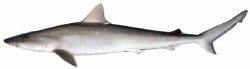
The Atlantic sharpnose shark is a very abundant, small coastal shark found in warm-temperate and tropical waters of the Northwest Atlantic and Western Central Atlantic. Its range extends from New Brunswick, Canada, to the Yucatan Peninsula, including the Gulf of Mexico.
Biology and Behaviour
They are found near sandy beaches, estuaries and bays, mostly over muddy and sandy bottoms. They also migrate seasonally, moving into deeper offshore waters during winter and returning to nearshore waters in spring. During these seasonal migrations, they can form large schools that are sometimes separated by sex.
This small coastal shark can reach approximately 113 cm (44.5 in) in total length. Females mature at 85 to 90 cm (33.5–35.4 in) and 2.4 to 2.8 years of age, while males mature at 80 to 85 cm (31.5–33.5 in) and 2 to 2.4 years of age. It feeds on small bony fish, worms, shrimp, crabs, and some small mollusks.
Reproduction and Lifespan
The Atlantic sharpnose shark is viviparous, meaning that embryos develop inside the uterus. The species reproduces annually and the gestation period lasts approximately 10 to 11 months. Females give birth to between 1 and 7 pups per litter, with an average of 4 young, each measuring approximately 29 to 37 cm (11.4–14.6 in) at birth. Mating occurs between mid-May and mid-July, and parturition generally takes place the following June. The species can live for up to 18 years.
Conservation
In the United States, Atlantic sharpnose sharks are caught in commercial fisheries and as bycatch. In the Gulf of Mexico, bycatch estimates from the shrimp trawl fishery operating in the region indicate that about 1.75 million individuals were caught annually between 1972 and 1999. The species is heavily exploited in Mexico and is considered one of the most important species in artisanal fisheries.
However, the Atlantic sharpnose shark is a very abundant species with an early age at maturity, short lifespan and generation time, moderately large litter size and relatively high population growth rates. These characteristics allow the species to withstand higher levels of fishing pressure than many other shark species. It is therefore considered to have low risk of extinction and is classified as Least Concern by the IUCN.
Do you have images or videos of Atlantic Sharpnose Sharks?
Submit them to [email protected].


Donate Now | Team Sharkwater Newsletter | Group Sales | Shark Database | #SharkFree
Contact Us | Press | Partners | Terms of Use | Privacy Policy
© 2026 Sharkwater Productions - The Truth Will Surface 🦈