


The Banded Wobbegong Shark is a common, bottom-dwelling carpet shark usually found in clear water, reef-associated areas. This species is endemic to Australia and occurs in warm-temperate coastal waters around several Australian states.
Biology and Behaviour
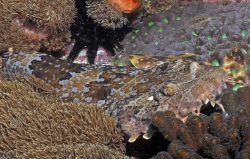
The Banded Wobbegong shark has a distinctive brownish upper-body colouration with well-defined, dark brown, saddle-shaped markings outlined in black and containing paler areas. The maximum length of this species remains uncertain, but it may reach up to 2.9 m (9.5 ft). This species is site-attached within its relatively shallow depth range of 0 to 195 m (0–640 ft). The Banded Wobbegong is found in bays, on rocky reef areas, coral reefs, including lagoons and reef flats, reef faces, and reef channels, as well as around offshore islands. This species of shark is nocturnal, resting on the bottom during the day in caves, under ledges on reefs, and in trenches. It becomes active at night and moves away from its resting areas.
Reproduction
The Banded wobbegong shark matures at about 1.75 m (5.7 ft) in total length. This species of shark is viviparous, meaning that the young develop inside the female before being born alive.
The gestation period lasts approximately 10 to 11 months, with births generally occurring between September and October. Their litter size ranges from 17 to 47 pups, with an average of 32 young which measure about 28 cm (11.0 in) in length at birth.
Conservation
The Banded Wobbegong is currently assessed as Least Concern by the IUCN because of its stable global population trend.The species can be caught as bycatch, especially in parts of eastern Australia, but is generally not targeted.
Do you have images or videos of Banded Wobbegongs?
Submit them to [email protected].


Donate Now | Team Sharkwater Newsletter | Group Sales | Shark Database | #SharkFree
Contact Us | Press | Partners | Terms of Use | Privacy Policy
© 2026 Sharkwater Productions - The Truth Will Surface 🦈