


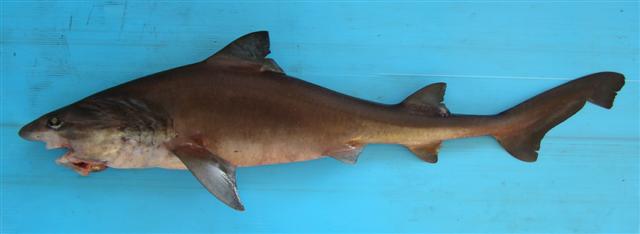
The Bigeye Houndshark is a small deep-water shark that lives close to the seafloor. It is found mainly on the continental shelf and continental slope, where the bottom is sandy or muddy.
The species has been recorded at depths between 110 and 1,000 m (361–3,280 ft) in waters ranging from 16 to 25 °C (61–77 °F). It may also occur at greater depths, with possible records reaching approximately 2,195 m (7,201 ft) in the Red Sea. The Bigeye Houndshark is native to the western Indian Ocean.It occurs from the Red Sea to India and has been reported in areas including the Red Sea, Oman, Pakistan and the western coast of India.
Biology and Behaviour
The Bigeye houndshark is a small shark, with larger eyes than other houndsharks. Males are much smaller than females. Females reach maturity about 35 to 58 cm (13.8–22.8 in), while males mature at 30–37 cm (11.8–14.6 in). They can reach at least 89 cm (35.0 in) in total length.
The species displays separation between the sexes according to depth. Adult females are generally found in shallower water, at approximately 300 m (984 ft), whereas males tend to occur deeper. Their diet consists of bony fishes and other bottom creatures like octopus and squid.
Reproduction
Bigeye houndsharks are viviparous, which means that embryos develop inside the mother and receive nutrients through a placental connection before birth. Females usually give birth to between 1 and 24 pups per litter, with a median litter size of approximately 9 pups. The gestation period lasts about 10 to 12 months and females reproduce every two years. The size of the young at birth is approximately 14 to 19 cm (5.5–7.5 in) in length.
Conservation
The Bigeye houndshark is currently classified as Least Concern by the IUCN. Its population trend is considered stable, and there is no evidence of an overall population decline. Its wide distribution and access to deeper-water refuge may help reduce the effects of fishing pressure.
Do you have images or videos of Bigeye Houndsharks?
Submit them to [email protected].



Donate Now | Team Sharkwater Newsletter | Group Sales | Shark Database | #SharkFree
Contact Us | Press | Partners | Terms of Use | Privacy Policy
© 2026 Sharkwater Productions - The Truth Will Surface 🦈