


Blackbelly lanternsharks are deepwater sharks that can be found worldwide in tropical to temperate waters at depths of 158 to 1,357 m (518–4,452 ft).
Biology and Behaviour
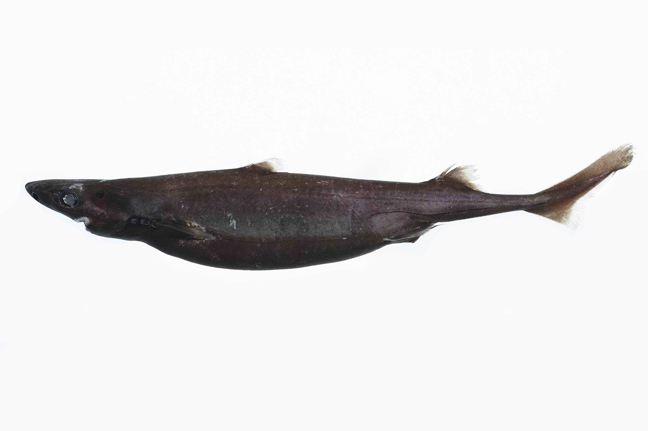
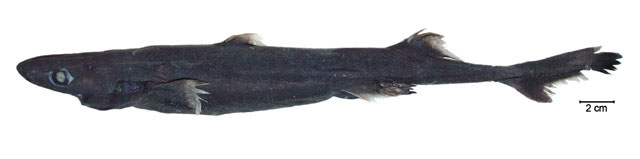
Blackbelly lanternsharks are small and slender with a black streak above and behind their pelvic fins. They have lighter coloured fins and are dark grey to brown on top with a black underside and a luminous belly, possibly to attract prey.
They mainly feed on squid, small bony fishes and shrimps. In some areas, it may undertake vertical movements toward shallower waters at night.
Reproduction and Lifespan
Blackbelly lanternsharks are ovoviviparous, meaning that embryos develop inside the mother’s body and feed on yolk. Pups are about 15 cm (5.9 in) long at birth and litter size remains unconfirmed, although two specimens carrying 7 embryos were reported. Females mature at 41 cm (16.1 in) and 13 years of age, while males mature at a shorter length of 34 cm (13.4 in) and at around 10 years. They can grow up to 47 cm (18.5 in) in length. The oldest recorded specimen was a male of 18 years old, but a reliable lifespan has still not been established.
Conservation and Tourism
The IUCN lists the Blackbelly Lanternshark as Least Concern because of its apparently low catchability and its presence in deeper waters where fishing pressure is limited. The species may however sometimes be caught as bycatch in midwater and benthic trawls, as well as in longline fisheries. There are currently no conservation actions or recommendations in place.
Do you have images or videos of Blackbelly Lanternsharks?
Submit them to [email protected].




Donate Now | Team Sharkwater Newsletter | Group Sales | Shark Database | #SharkFree
Contact Us | Press | Partners | Terms of Use | Privacy Policy
© 2026 Sharkwater Productions - The Truth Will Surface 🦈