


The Blacktip shark is an inshore and offshore shark found on or near continental and insular shelves, from the surface to depths of 140 m (459 ft). It is often found near river mouths and estuaries, muddy bays, mangroves, lagoons, and coral reef drop-offs. This species is associated with the seafloor and reefs.
It is found in tropical, subtropical, and warm temperate waters throughout the Atlantic, Indian, and Pacific ocean
Description
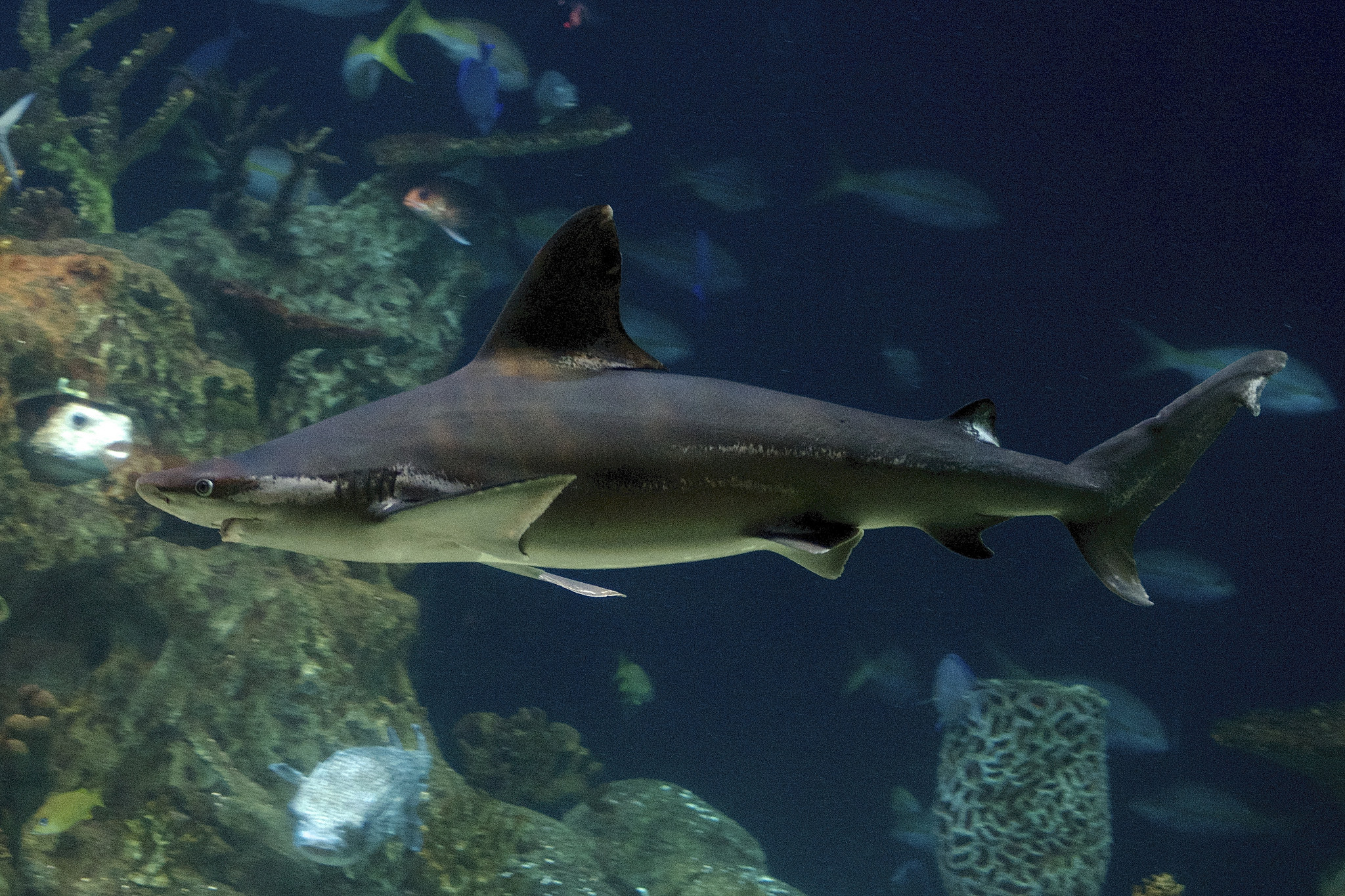
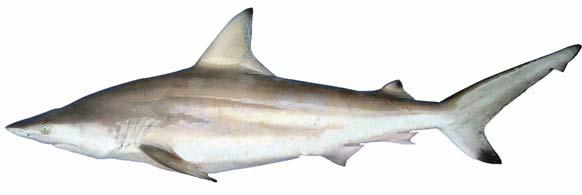
The Blacktip shark has a long, narrow, pointed snout, long gill slits, and pointed upper teeth. Its body is dark grey, blue-grey, or dusky bronze above and white underneath. The fin tips of this shark, except for the anal fin and the upper lobe of the caudal fin, are dusty and black. These markings may become less visible with age.
Biology and Behaviour
This species can grow up to 286 cm (9.4 ft) in length and the maximum recorded weight is 122.8 kg (270.7 lb). Depending on the region, they can live for 11 to 24 years. The Blacktip shark is an active hunter that feeds mainly in shallow coastal waters, usually within the upper 30 m (98 ft). Its diet consists mainly of small schooling bony fish, but it may also eat small sharks, rays, skates, squid, shrimp, and crabs.
Reproduction
Blacktip sharks are viviparous, meaning that embryos develop inside the mother’s uterus and receive nutrients through a placental connection. Their gestation period lasts approximately 11 to 12 months, and females produce between 1 and 11 young per litter. The size at birth ranges from 38 to 72 cm (15–28 in) in length. Female Blacktip sharks give birth in shallow coastal and estuarine nursery grounds.
Conservation
The Blacktip Shark is listed as Vulnerable on the IUCN Red List. It is valued for its meat and fins, and is captured both intentionally and as bycatch in gillnet, longline, and trawl fisheries. Management measures are in place in the United States and Australia.
The species is also listed in CITES Appendix II, meaning that its international trade is regulated and exports require the appropriate permits.
Do you have images or videos of Blacktip sharks?
Submit them to [email protected].


Donate Now | Team Sharkwater Newsletter | Group Sales | Shark Database | #SharkFree
Contact Us | Press | Partners | Terms of Use | Privacy Policy
© 2026 Sharkwater Productions - The Truth Will Surface 🦈