


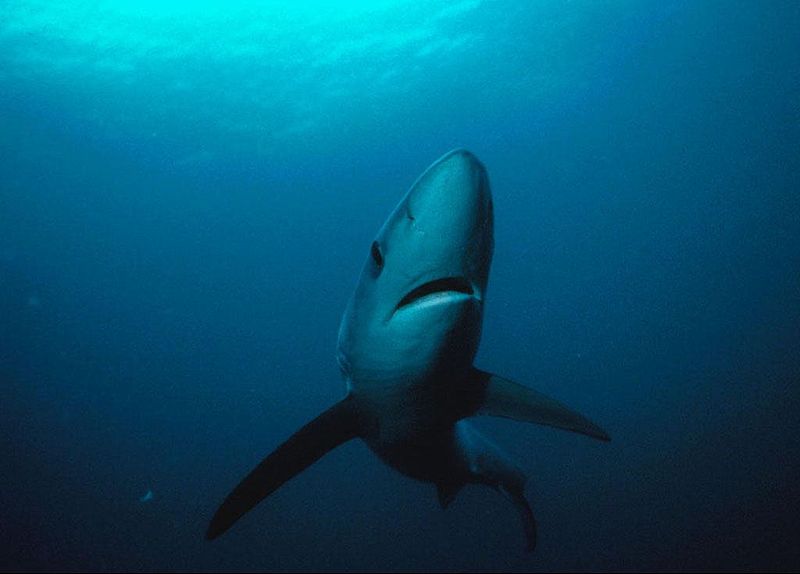
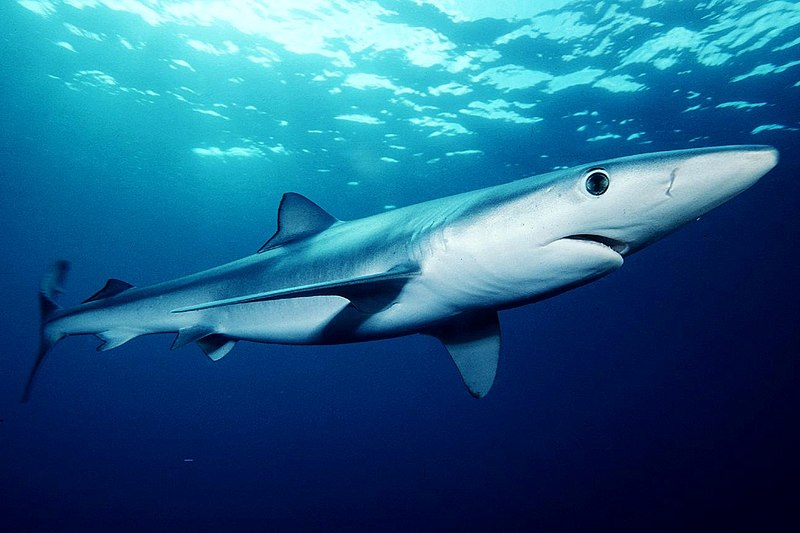
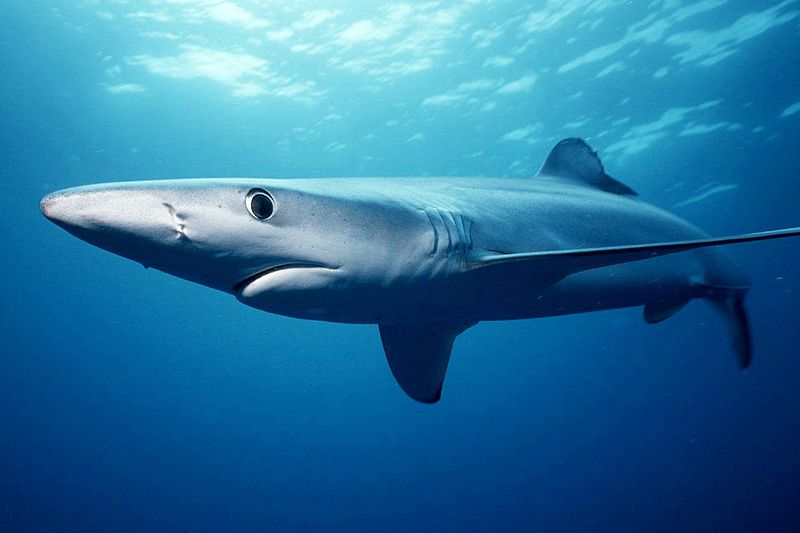
The Blue Shark is one of the world’s most wide-ranging shark species, found throughout tropical and temperate waters including in the Indian, Atlantic and Pacific Oceans and the Mediterranean Sea. They can be found from the surface to 1,000 m (3,280 ft) in depth, in water temperatures ranging from 7 to 21 degrees Celsius (44.6–69.8 °F). The species is also known for travelling long distances during its migrations.
The Blue Shark is the world’s most commonly consumed shark and is one of the most popular species in sport fisheries in the US, used for game fishing by sport anglers with a rod and reel and in recreational fisheries. It is marketed fresh, smoked, dried or salted. Its meat is used for human consumption and fishmeal, its liver is kept for oil, its fins are used for shark-fin soup, and its hides are used for leather.
Biology and Lifespan
Blue sharks have one of the fastest growth rates of all sharks, generally reaching maturity at 5 years old. Females produce litters of about 35 pups, which measure between 35 to 40 cm (13.8–15.7 in) in length at birth. They grow on average up to 3.35 m (10.9 ft) long and 240 kg (529 lb) in weight. The maximum recorded length is 3.80 m (12.5 ft). In the wild, Blue sharks have an average lifespan of 15 to 16 years, but in captivity they only live about 8 years.
Blue Sharks are top predators that help to regulate prey populations in the pelagic environment, making them an important part of marine ecosystems. Their diet includes fish, squid, crustaceans, small sharks and carrion.
Conservation and Tourism
Blue Sharks are mainly caught as bycatch in high-seas longline and driftnet fisheries and are valued commercially for their fins, squalene (liver oil), skin, cartilage, and their teeth and jaws. There are also some countries that readily consume Blue sharks’ meat such as Spain, Brazil, Italy and France.
The high abundance and worldwide distribution of this species offers a relative buffer against extinction. However, if bycatch in high-seas fisheries does not come under strict monitoring and control, some stocks may be threatened in the future. To date, the IUCN Redlist for endangered species lists the Blue shark as Near Threatened. It is also listed in CITES Appendix II, meaning that international trade is regulated and requires the appropriate permits.
Do you have images or videos of Blue Sharks?
Submit them to [email protected].


Donate Now | Team Sharkwater Newsletter | Group Sales | Shark Database | #SharkFree
Contact Us | Press | Partners | Terms of Use | Privacy Policy
© 2026 Sharkwater Productions - The Truth Will Surface 🦈