


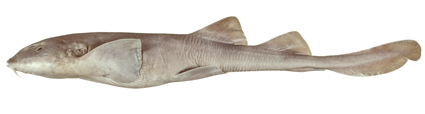
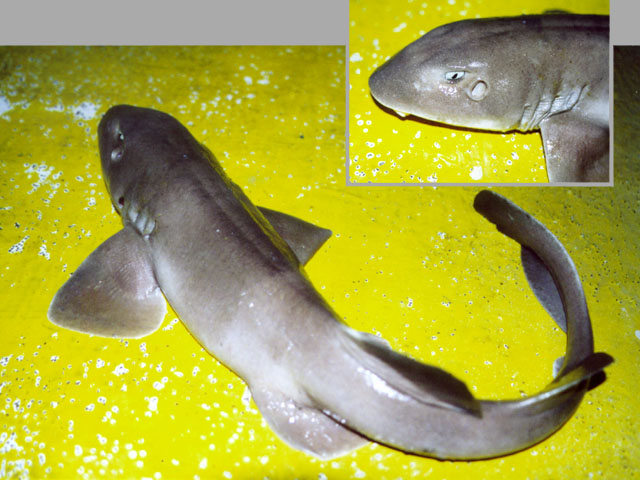
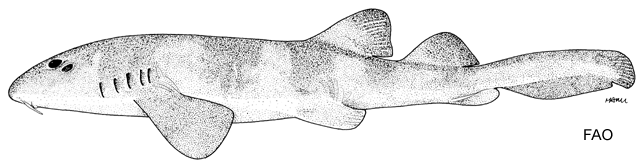
The Colclough’s Shark, also known as the Bluegrey Carpetshark, is a rare species currently known from approximately 50 records. It is mainly found along the eastern coast of Australia, particularly in southern Queensland and northern New South Wales. This species belongs to the Brachaeluridae family.
Biology
This species reaches a maximum size of 88 cm (34.6 in) in total length. Females mature at approximately 55 cm (21.7 in), while males mature at approximately 61 cm (24.0 in). Size at birth is estimated to be approximately 17 to 19 cm (6.7–7.5 in). Lifespan and growth data are currently not available for this species.
Reproduction
This species is ovoviviparous, meaning that embryos develop inside the mother’s body and feed on yolk. Litter size is usually between 6 and 7 pups. Their reproduction is thought to occur on a biennial or triennial cycle, but has not been confirmed.
Habitat
This shark is endemic to a small area of the eastern coast of Australia, extending from Byron Bay in New South Wales to the Hardline Reefs in Queensland.
The Colclough’s Shark occurs in shallow inshore waters of less than 4 m (13 ft) and has also been recorded down to 217 m (712 ft), although it is mostly found at depths below 100 m (328 ft). It is a nocturnal species. During the day, it generally remains in rocky reef crevices, and it comes out at night to feed.
Despite many surveys and research efforts in areas where it is known to occur, the species is rarely encountered. Most of its distribution has long been subject to trawling and other fishing pressure.
Conservation
The Colclough’s Shark finds refuge in marine national parks and sanctuary zones within protected areas across its distribution. Moreton Bay Marine Park is particularly important, with 15% of the park protected as marine national park zones and other areas where trawling is prohibited.
This species is assessed as Vulnerable because of its suspected population decline, small population size, and exposure to several threats.
Do you have images or videos of Colclough’s Sharks?
Submit them to [email protected].


Donate Now | Team Sharkwater Newsletter | Group Sales | Shark Database | #SharkFree
Contact Us | Press | Partners | Terms of Use | Privacy Policy
© 2026 Sharkwater Productions - The Truth Will Surface 🦈