


The Bull shark is a large shark found in tropical, subtropical and some temperate waters. Bull sharks are commonly associated with reefs, but they have a widespread population across warm oceans, rivers and lakes. The species has been documented in at least 125 freshwater rivers and lakes across its global range. They are native to many regions of the Atlantic, Indian, and Pacific Oceans. Its freshwater habitats are particularly vulnerable to negative human impacts and habitat modification. Despite protections, finning continues to be a big issue for the Bull shark.
Biology
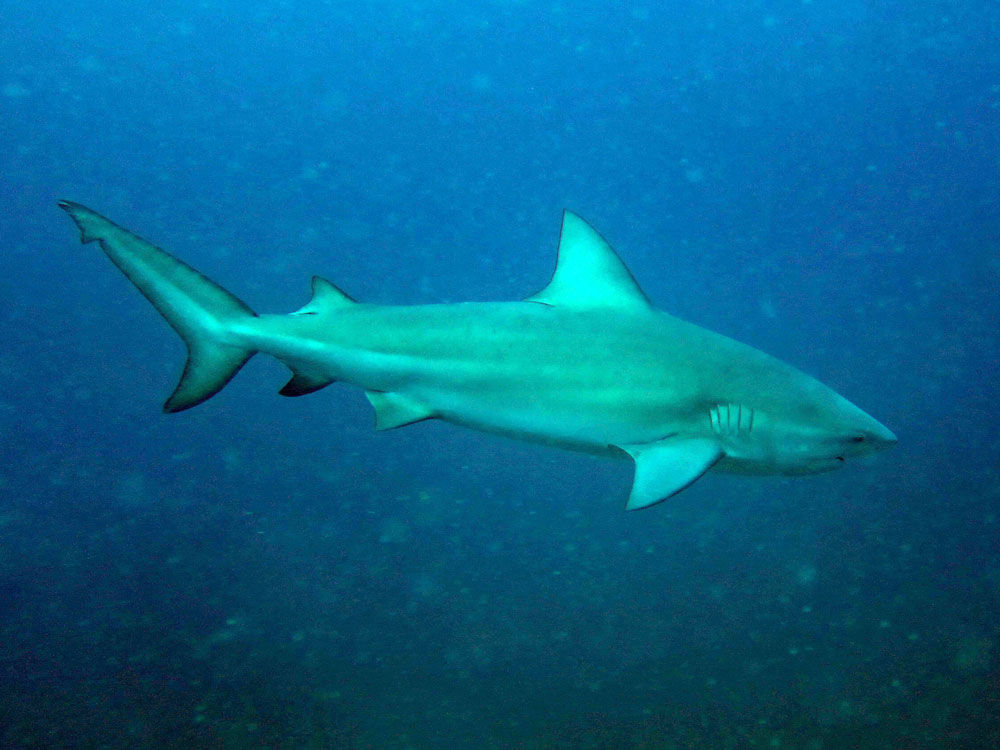
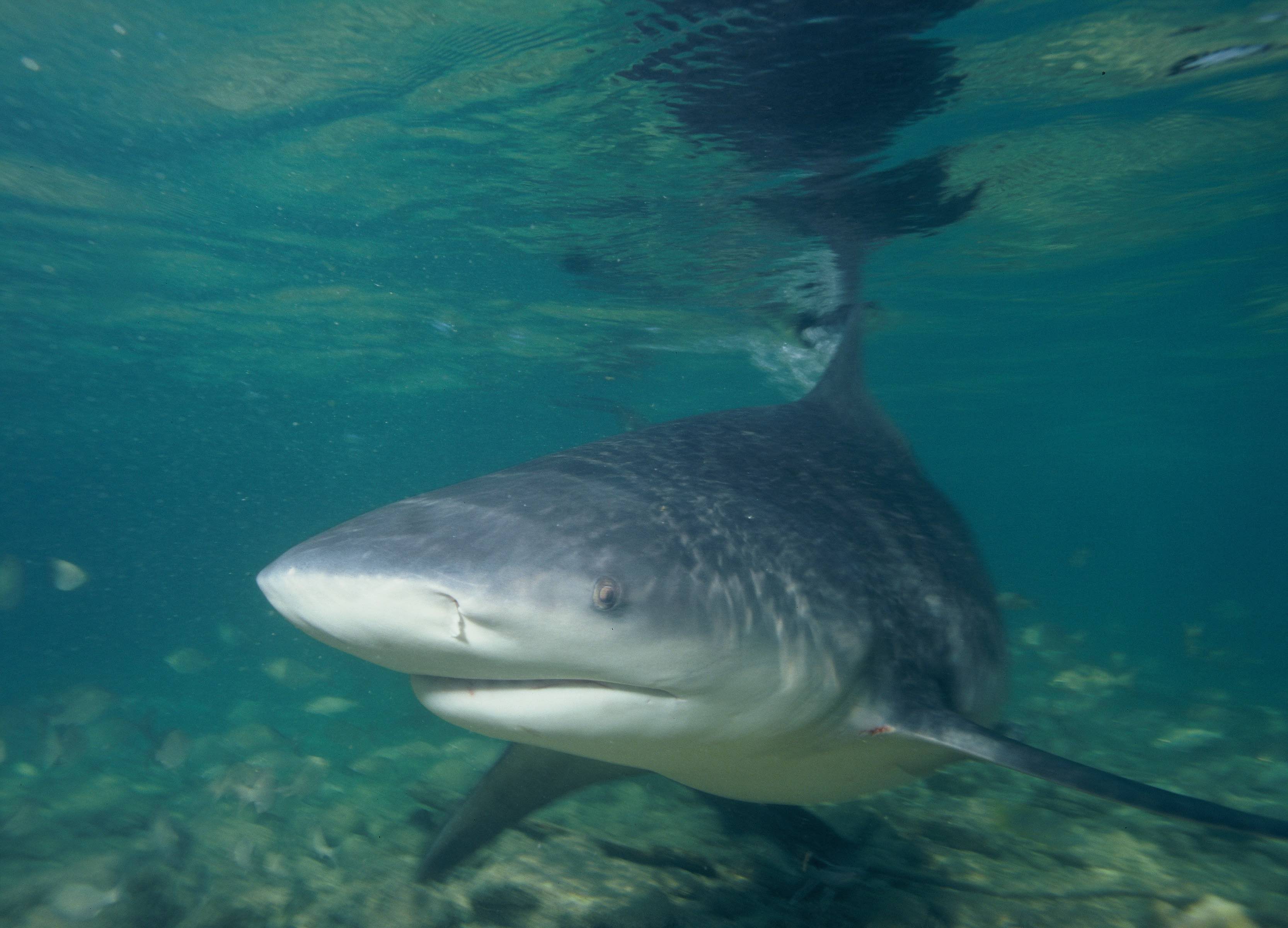
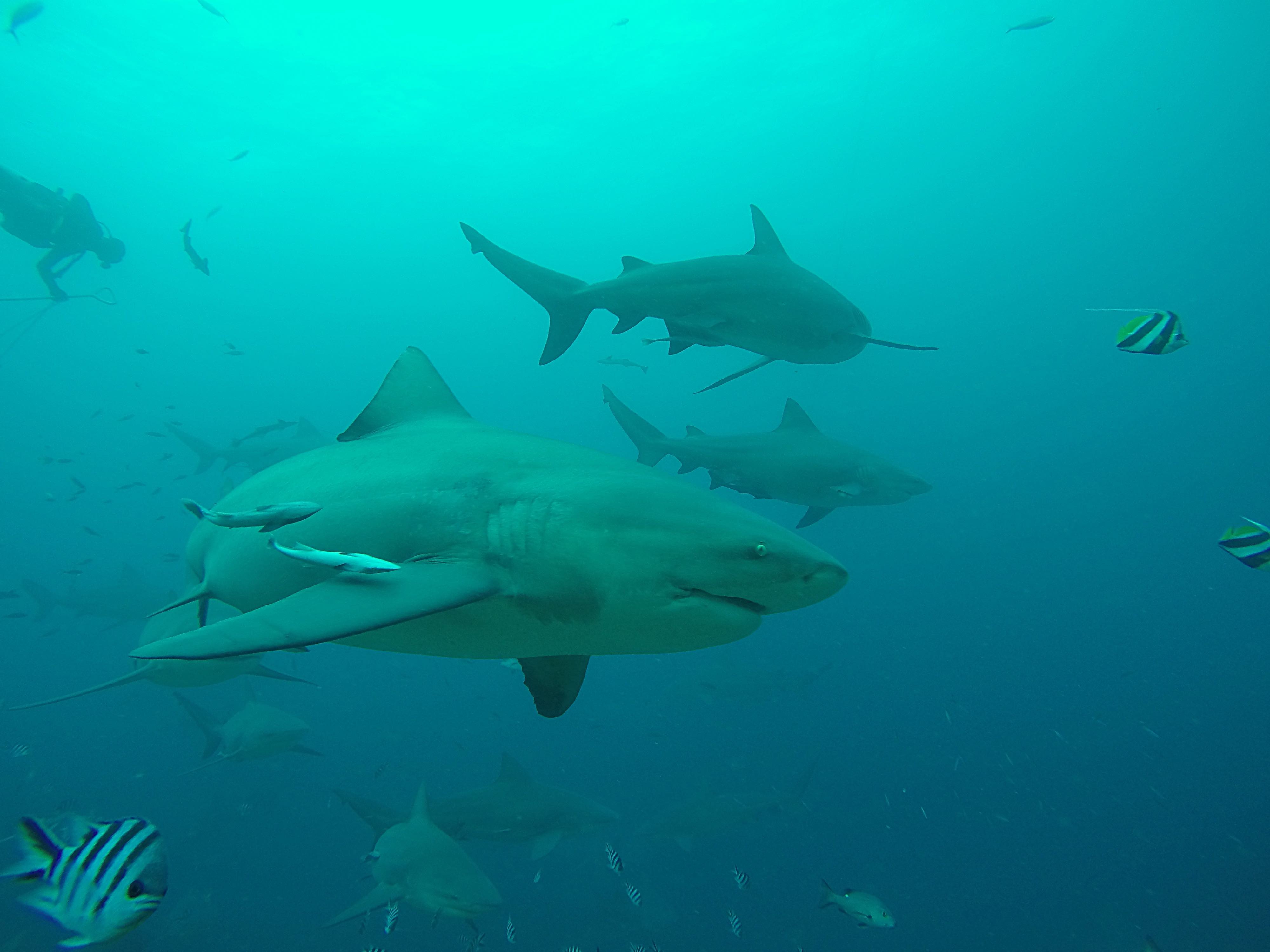
The Bull shark has a short, broad and blunt snout, small eyes and triangular saw-edged upper teeth. The common length of a Bull shark is approximately 2.6 m (8.5 ft), but males can reach about 3.6 m (11.8 ft) and females can grow up to 4 m (13.1 ft) in length. The maximum weight published for a Bull shark was 316.5 kg (697.8 lb). They can live up to 32 years.
Reproduction
Reproduction is viviparous. Females give birth to live pups, and embryos are nourished through a placenta. Litters can range from 1 to 15, but they usually contain between 6 and 8 young. The size at birth is approximately 56–81 cm (22–31.9 in). Males reach sexual maturity at approximately 1.57–2.26 m (5.15–7.41 ft), while females mature at about 1.80–2.30 m (5.9–7.54 ft). The age at maturity varies between populations.
In the western North Atlantic, young are born in late spring or early summer. Off the coast of Nicaragua, female Bull sharks may have pups throughout the year, with a peak in spring and early summer. Their gestation period is approximately 10 to 11 months.
Behaviour
The Bull shark is a migratory species that goes north during the summer and south when temperatures cool. They can travel long distances and are capable of covering 180 kilometres in 24 hours. They can move between freshwater and saltwater because they are euryhaline, meaning that they can tolerate a wide range of salinities.
Bull sharks inhabit shallow waters especially in bays, estuaries, rivers, and lakes at depths ranging from 0 to 164 m (0–538 ft), but they are most often found above 30 m (98 ft). The Bull shark feeds on bony fishes, other sharks, rays, mantis shrimps, crabs, squid and turtles.
Conservation
Bull sharks are assessed as Vulnerable by the IUCN. Their main threats include targeted fishing for their fins and meat, and the degradation or loss of nursery habitats such as estuaries, mangroves, and rivers.
Do you have images or videos of Bull sharks?
Submit them to [email protected].


Donate Now | Team Sharkwater Newsletter | Group Sales | Shark Database | #SharkFree
Contact Us | Press | Partners | Terms of Use | Privacy Policy
© 2026 Sharkwater Productions - The Truth Will Surface 🦈