


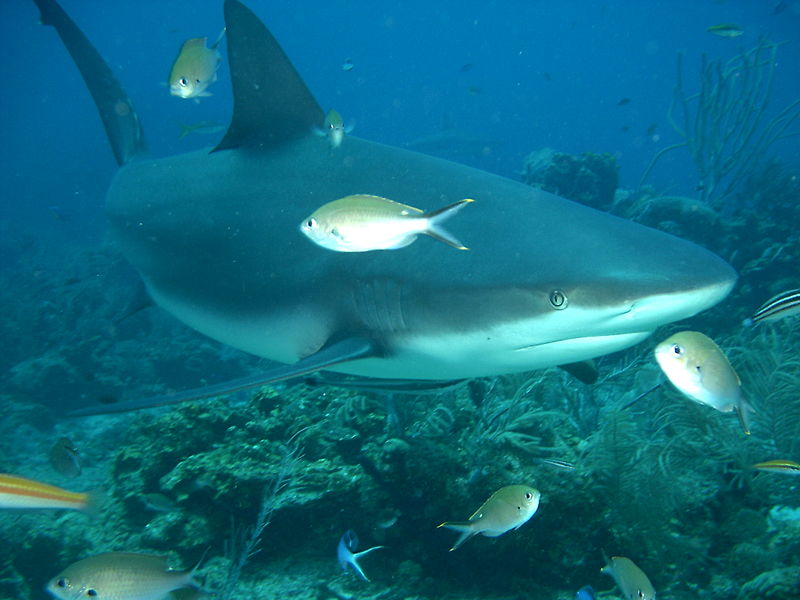
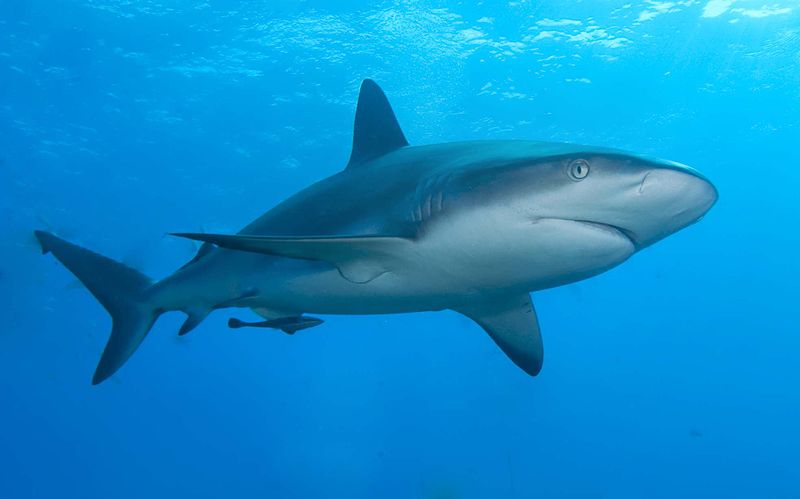
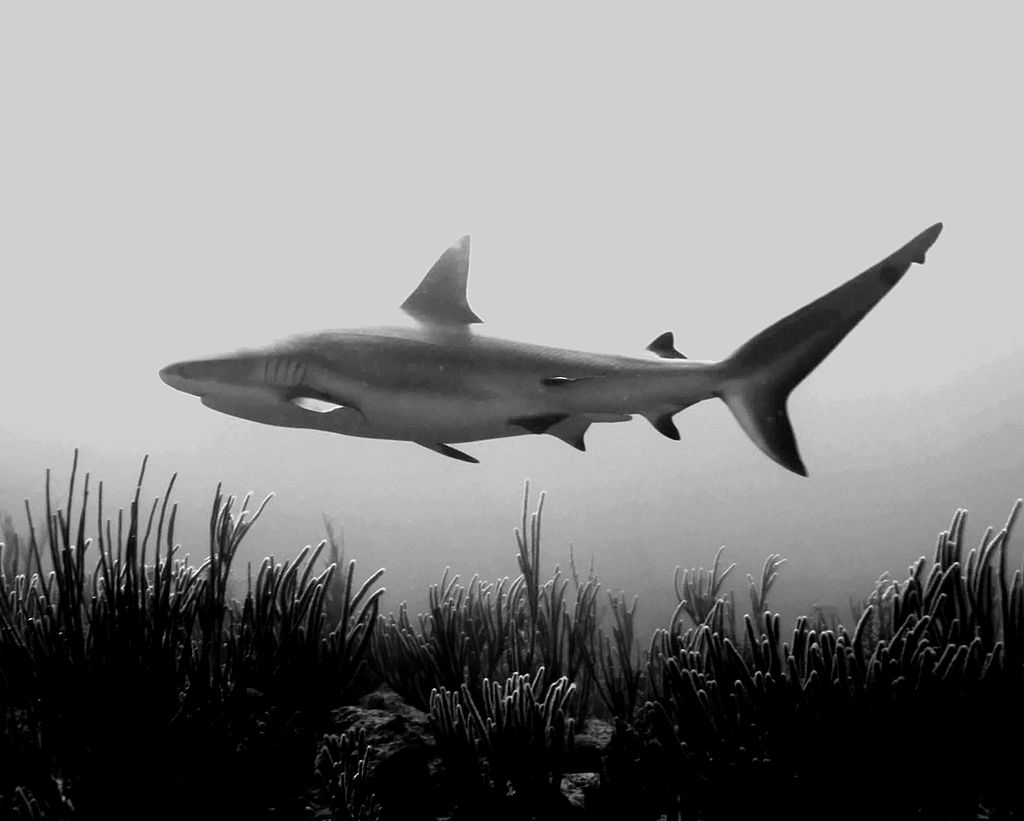
The Caribbean reef shark is commonly found close to the bottom of shallow waters. As its name indicates, this shark is commonly associated with coral reefs. It is native to the Western Atlantic, with a range extending from North Carolina and Florida to southern Brazil, including the northern Gulf of Mexico, the Bahamas and the Caribbean Sea.
Biology and Behaviour
The Caribbean reef shark is a large grey shark with a short blunt snout. The biggest Caribbean reef shark ever reported measured 2.95 m (9.68 ft). Despite its size, it feeds on small bony fish, crabs, squid and some elasmobranchs.
This species is mainly a shallow-water shark, but it can reach depths of up to 378 m (1,240 ft). It is commonly found on coral reefs, near drop-offs and on the ocean floor.
Reproduction
The Caribbean reef shark is viviparous, meaning that it gives birth to live young. The embryos develop inside the uterus and are nourished through a placenta. Females give birth to between 3 and 6 pups per litter, and the pups measure about 70 cm (27.6 in) in length at birth. Gestation lasts approximately one year and reproduction occurs every two years. Males reach sexual maturity at 150–170 cm (59.1–66.9 in) in length, while females mature at about 180–190 cm (70.9–74.8 in).
Conservation
The species is caught both as bycatch and as a target species in commercial and artisanal fisheries. Caribbean reef sharks reproduce very slowly, which makes it difficult for their population to recover from declines caused by overfishing. They are considered a vulnerable species by the IUCN and are listed in CITES Appendix II, meaning their international trade requires the appropriate CITES permits.
Do you have images or videos of Caribbean Reef Sharks?
Submit them to [email protected].


Donate Now | Team Sharkwater Newsletter | Group Sales | Shark Database | #SharkFree
Contact Us | Press | Partners | Terms of Use | Privacy Policy
© 2026 Sharkwater Productions - The Truth Will Surface 🦈