


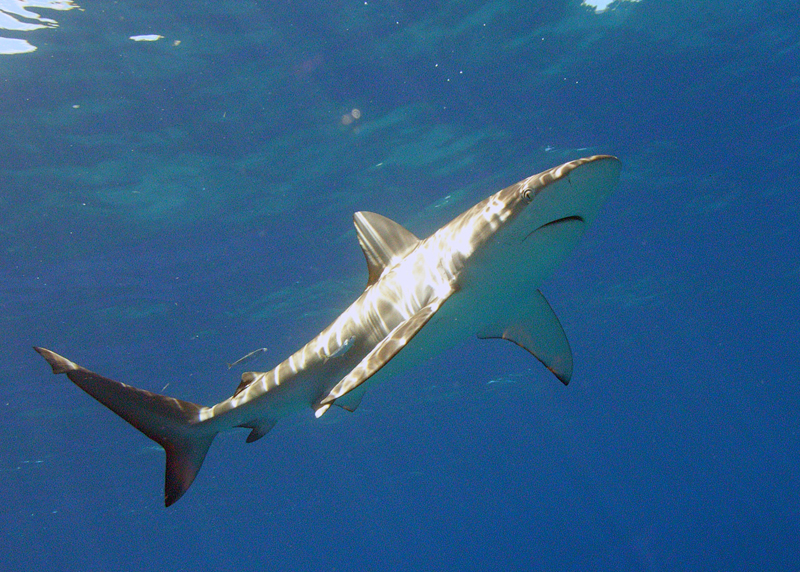
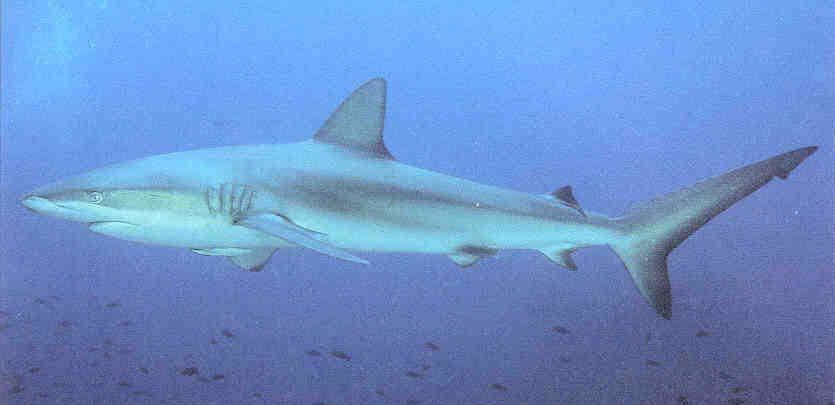
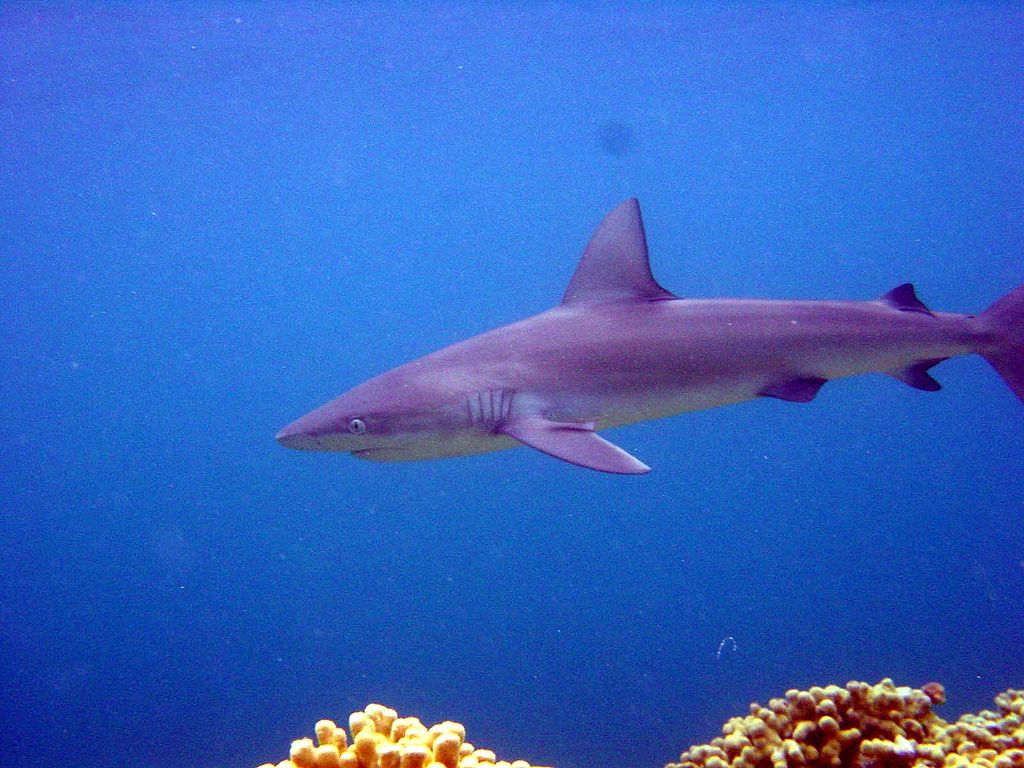
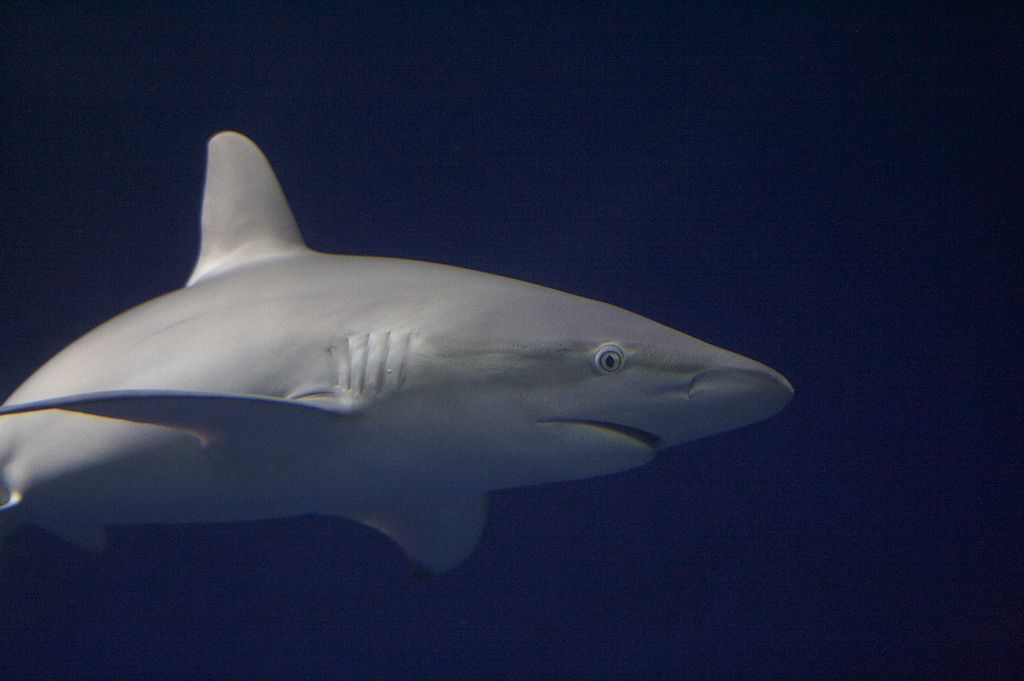
The Galapagos shark is a reef-associated tropical shark found close inshore as well as offshore, commonly in clear waters with coral and rocky bottoms. The Galapagos shark prefers waters around oceanic islands and seamounts with strong currents. It has a patchy distribution and is native to the Eastern Atlantic, Western Indian Ocean and the Western and Eastern Pacific Oceans. This shark can be found in areas like Walter’s Shoal, south of Madagascar, and around Middleton and Elizabeth Reefs.
Biology and Behaviour
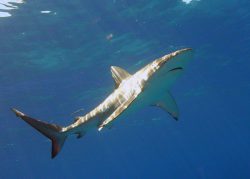
The Galapagos shark is brownish-grey above and white below with dusky markings on the fins. The average length for this shark is about 3 m (9.8 ft), but it can reach a maximum length of 3.7 m (12.1 ft) and a maximum weight of 85.5 kg (188 lb). Although it is a coastal species, it is capable of crossing considerable distances of open ocean between islands. Its diet is composed mainly of bottom-dwelling fishes, as well as squid and octopus. In the Galapagos Islands, it also preys on sea lions and marine iguanas. The Galapagos shark has a depth range of 1 to 286 m (3.3–938 ft), but commonly swims in depths of 30 to 180 m (98–590 ft).
Reproduction and Lifespan
Galapagos sharks are aplacental viviparous, meaning that the embryos develop inside the uterus but are nourished from a yolk sac instead of a placenta. Females usually give birth to 4 to 16 pups per litter and reproduce every 2 to 3 years. The size of the young at birth ranges from 57 to 81 cm (22.4–31.9 in) in length. They can live up to approximately 24 years.
Conservation
This species is at risk from fishing for meat and fins in parts of its range. Illegal shark fishing also remains an issue in Galápagos Marine Reserve, where the species is abundant. Galapagos sharks have slow reproduction rates and a limited ability to sustain overfishing. They were previously classified as Near Threatened by the IUCN, but a reassessment in 2019 classified the species as Least Concern because its global decline was not large enough to meet the threshold for Near Threatened status. Galapagos sharks are also listed in CITES Appendix II along with every member of the Carcharinidae family. This means that their international trade is regulated and that they can’t be exported without permits.
Do you have images or videos of Galapagos Sharks?
Submit them to [email protected].


Donate Now | Team Sharkwater Newsletter | Group Sales | Shark Database | #SharkFree
Contact Us | Press | Partners | Terms of Use | Privacy Policy
© 2026 Sharkwater Productions - The Truth Will Surface 🦈