


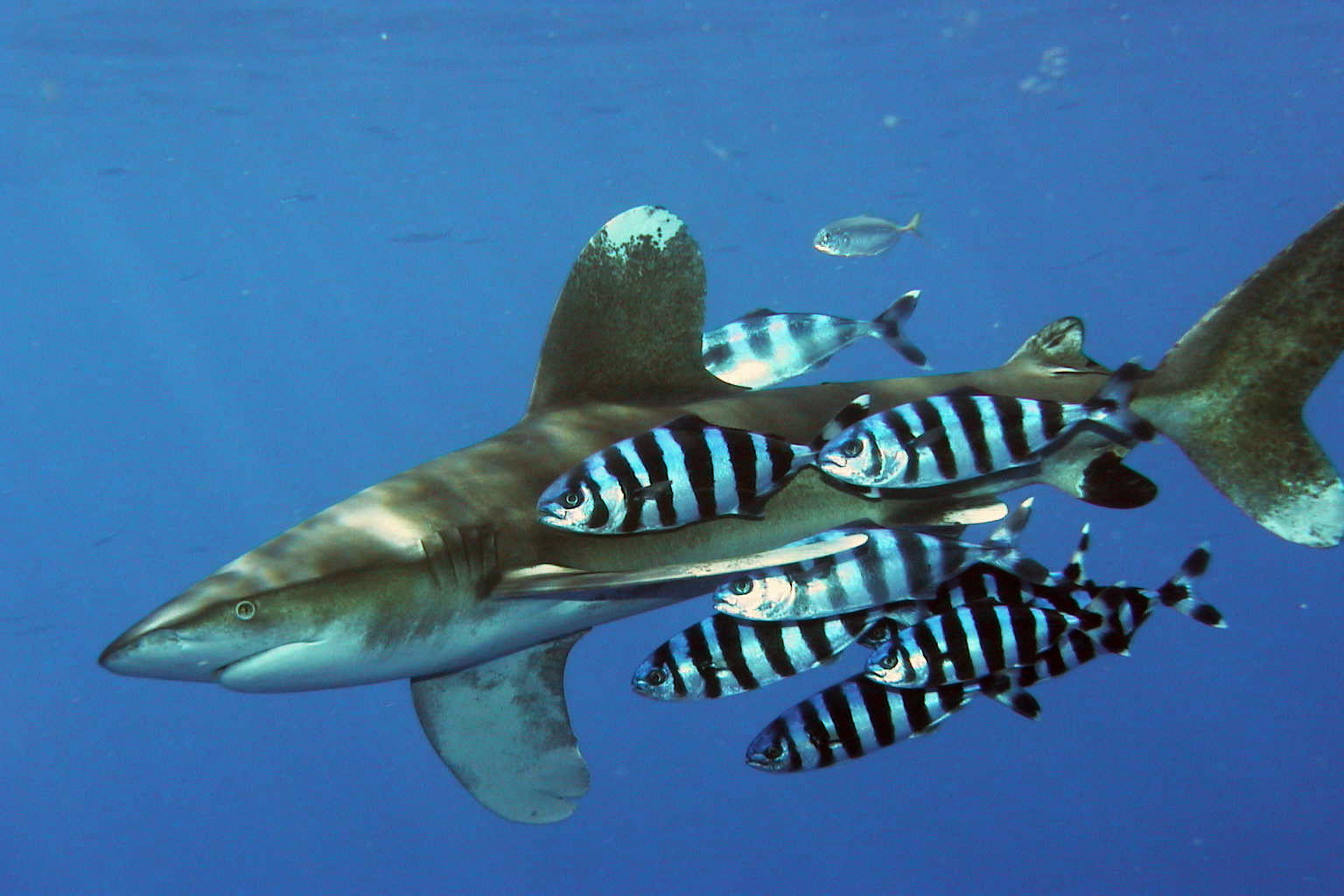
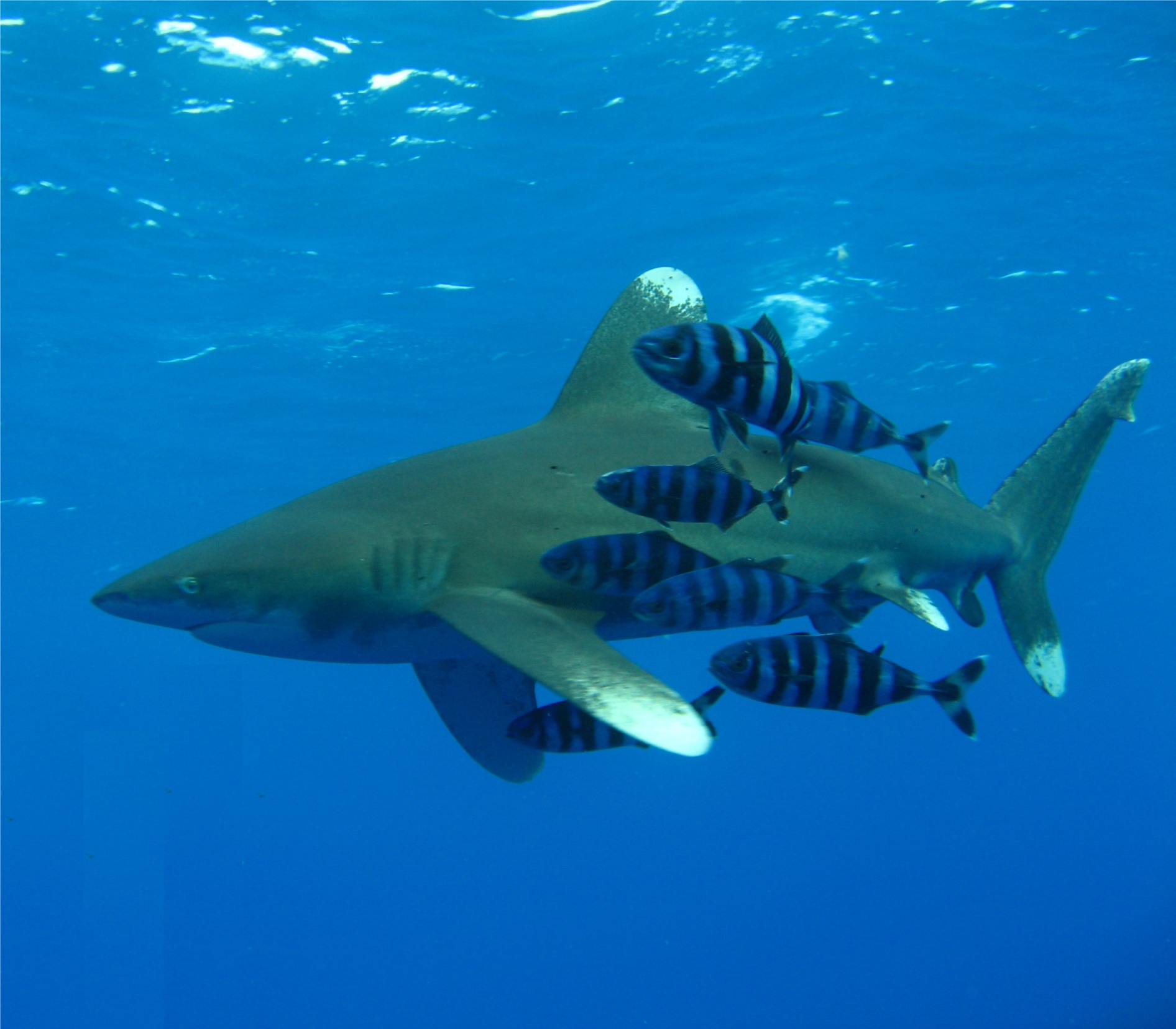
Oceanic Whitetip Sharks are found in tropical and subtropical waters all over the world and are highly migratory. They live in temperatures between 18 and 28 °C (64–82 °F), and are usually found offshore in the open ocean. They were historically among the most common sharks in the world alongside blue sharks and silky sharks, but their populations have since declined severely. They are recognizable by their very long and rounded dorsal and pectoral fins, and by the white tips of their fins. They are usually 2.5 to 3 m (8.2–9.8 ft) long, but some rare individuals can be 4 m (13 ft) long. The oldest recorded individual was 22 years old, but the maximum age is thought to be between 25 and 36 years.
Reproduction
They are viviparous, meaning that embryos develop inside the female’s uterus and receive nutrients through a placenta. The young are born at about 60 cm (23.6 in) after a gestation period of approximately 10 to 12 months. Litter sizes range from 1 to 15 pups.
Behaviour
Oceanic whitetips spend most of their time in the upper part of the water column near the surface, but sometimes make deep dives. They have been recorded at depths up to 1,082 m (3,550 ft), but usually stay above 200 m (656 ft). They are frequently accompanied by remora and pilot fishes, with whom they have a mutualistic relationship. Sharks protect pilot fishes from other predators, and the pilot fish keeps sharks free of external parasites.
Fish and squid make up most of their prey, but they are opportunistic predators and will eat anything they can catch including seabirds, marine mammals and other sharks. They are very active, curious, and inquisitive when scavenging, and compete for food with silky sharks.
Conservation
This formerly abundant species is under severe pressure in most of its range and is now considered Critically Endangered by the IUCN. Its populations have severely declined, with an estimated reduction of more than 98% over approximately 61 years. Their long fins are highly valued for shark fin soup and their meat is consumed around the world. They are listed in CITES Appendix I, which means a permit is required to export them.
Do you have images or videos of Oceanic Whitetip Sharks?
Submit them to [email protected].




Donate Now | Team Sharkwater Newsletter | Group Sales | Shark Database | #SharkFree
Contact Us | Press | Partners | Terms of Use | Privacy Policy
© 2026 Sharkwater Productions - The Truth Will Surface 🦈