


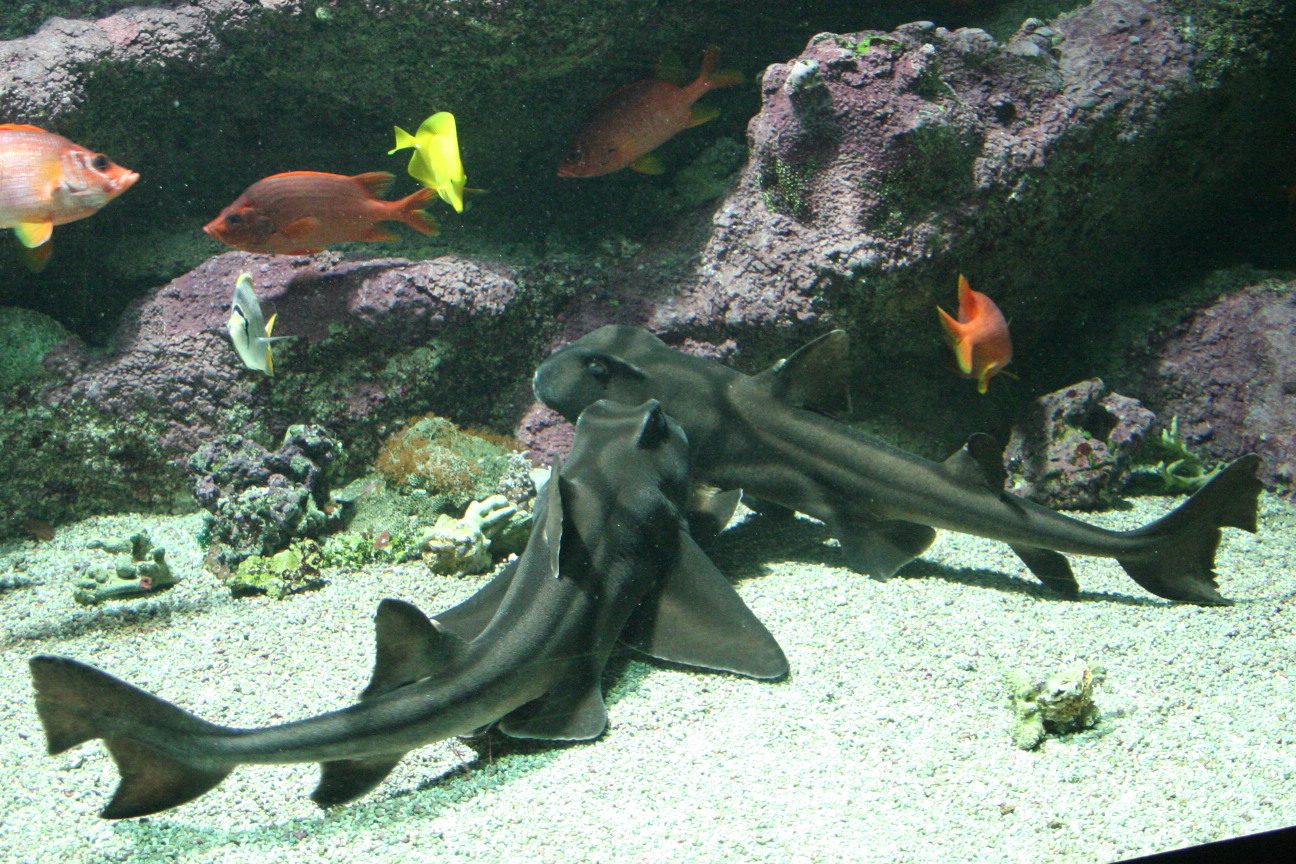
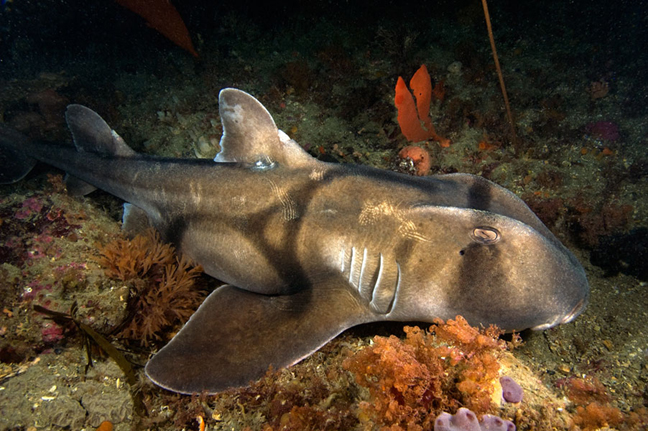
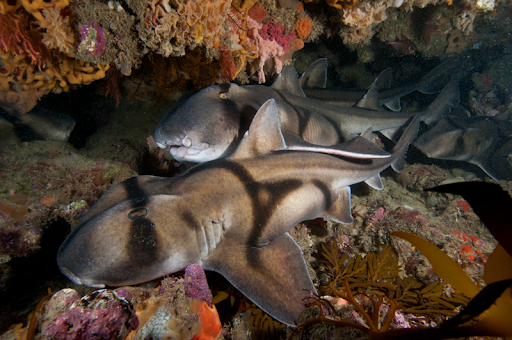
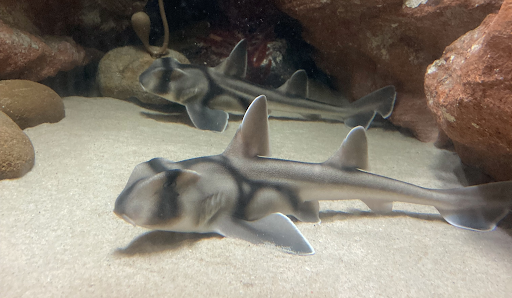
The Port Jackson shark is a species of bullhead shark found in the coastal region of southern Australia, including the waters of Port Jackson at depths of up to 275 m (902 ft).
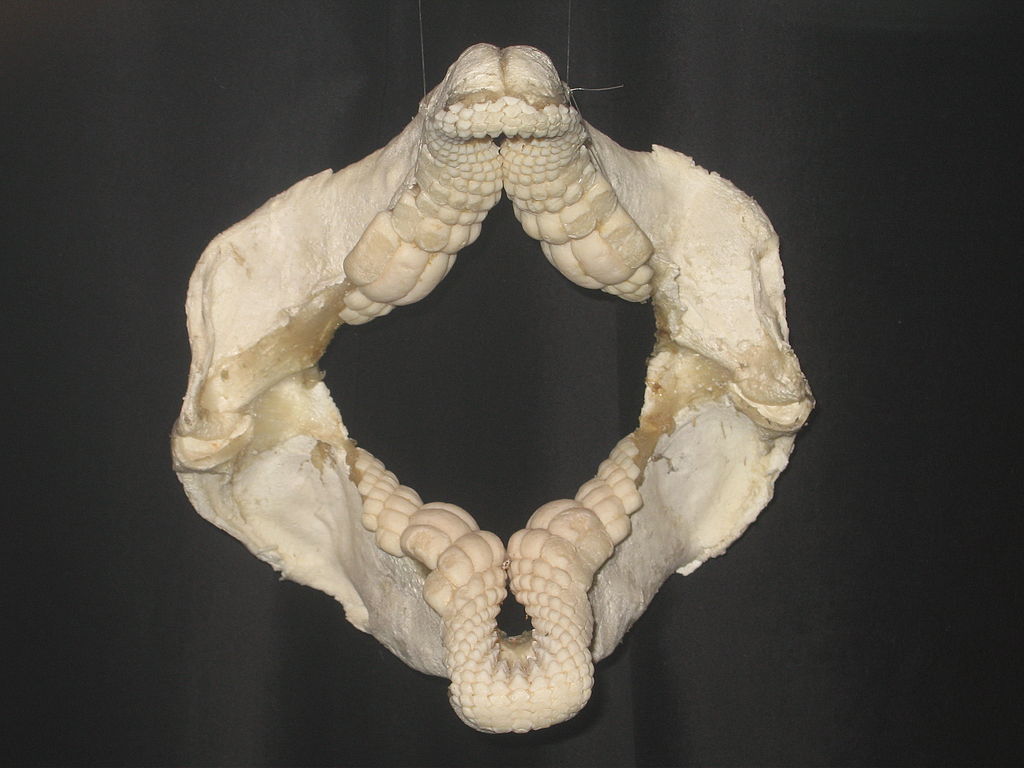
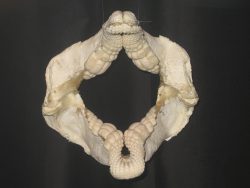
Like all bullheads, they have broad, blunt heads, and crests above the eyes. But they some unique characteristics such as the harness-like markings along its body. Their frontal teeth are sharp and have cusps, while their back teeth are flat and blunt. This is a very rare feature for sharks, as most species have only one type of teeth. They have spines at the frontal edge of both of their dorsal fins. These spines are rumoured to be poisonous, but this hasn’t been proven.
They’re oviparous, meaning egg laying. During the breeding season they lay two eggs every 10 to 14 days, for a total of 8-16 eggs per year. About 90% of pups die before reaching sexual maturity at 8-10 years of age. Their maximum length is 165 cm (65 in).
Currently there are no indications that this species is declining. Their conservation status is Least Concern.
Although the Port Jackson Shark is a large bycatch component of several fisheries across its range, most individuals are returned to the water alive and post-release stress studies have shown that the species is very resilient to capture stress from gillnet, trawl, and longline gear, suggesting high post-release survival rates. The estimated decline of the Port Jackson Shark in Bass Strait between 1973-74 and 1998-2001 has now ceased and has been reversed as fishers no longer persecute the species. This decline was only observed in a small proportion of the species’ range and standardized catch-per-unit-effort from an observer program does not support the decline observed in the shark abundance surveys. In addition, a rapid semi-quantitative ecological risk assessment method showed that the Port Jackson Shark is at low risk from several fisheries because of its low catch susceptibility. The effects of fisheries on the Port Jackson Shark in other parts of its distribution are likely to be negligible and habitat modification and other environmental factors do not appear to be a threat to the health of the population. There is currently no evidence to suggest that the Port Jackson Shark faces any risk of extinction, justifying a listing of Least Concern.
Small individuals are captured for use in the hobbyist aquarium trade and fetch good prices. Live animals are sold both domestically and internationally. Port Jackson Sharks advertised by aquarium suppliers in the United States sell for up to US$180. Specimens are also collected by commercial aquaria for display purposes, but in relatively small numbers.
The only specific management regulation that exists for the Port Jackson Shark is the recreational fishing trip catch limit for sharks imposed by Western Australia (four of any species). No other states have bag or size limits that cover this species. However, site attached species such as the Port Jackson Shark may also benefit from habitat protection and suitably designed and implemented no-take zones, where all forms of harvesting or fishing are excluded. Commercial collectors of live specimens for the aquarium trade are normally licensed by state governmental legislation. Large commercial aquaria are able to successfully breed the species in captivity, reducing the reliance on wild caught animals. The occurrence of this species close inshore offers refuge from some larger commercial fisheries.
Do you have images or videos of Port Jackson Sharks?
Submit them to [email protected].


Donate Now | Team Sharkwater Newsletter | Group Sales | Shark Database | #SharkFree
Contact Us | Press | Partners | Terms of Use | Privacy Policy
© 2026 Sharkwater Productions - The Truth Will Surface 🦈