


The Centroscymnus Coelolepis, also known as the Portuguese Dogfish, is a species of sleeper shark of the Somniosidae family.
Biology:
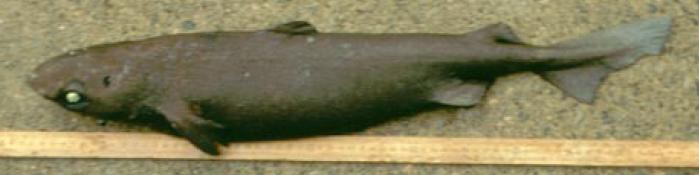
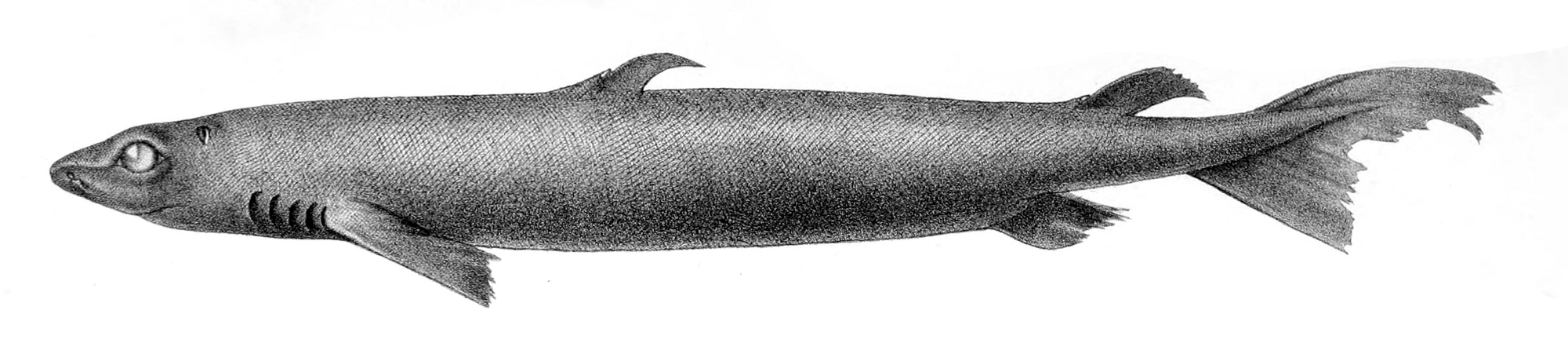
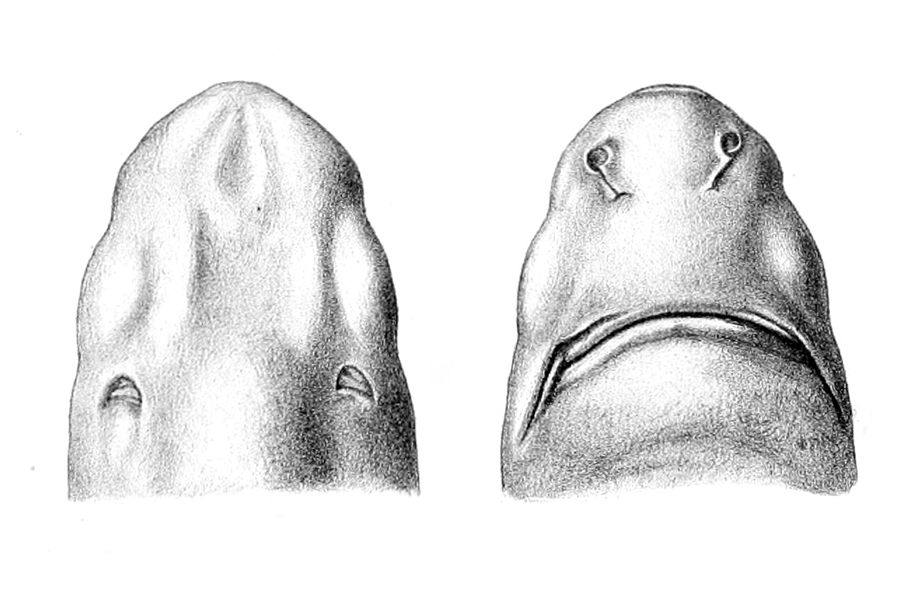
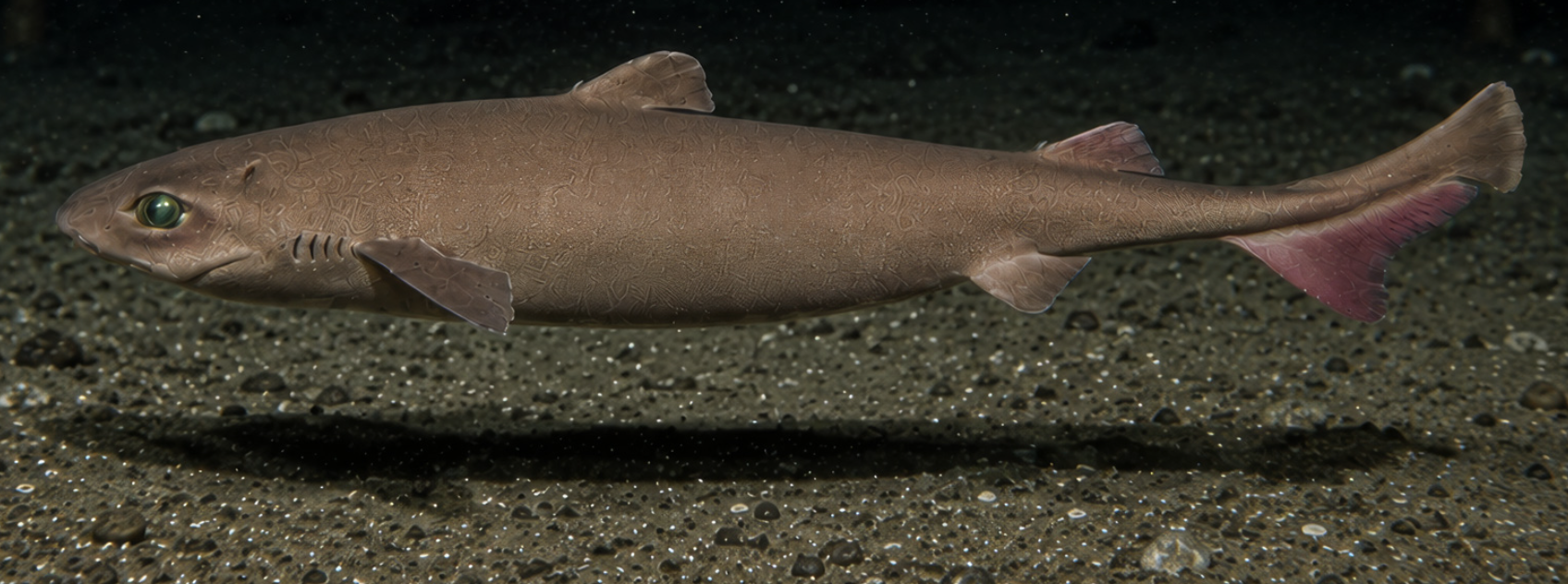
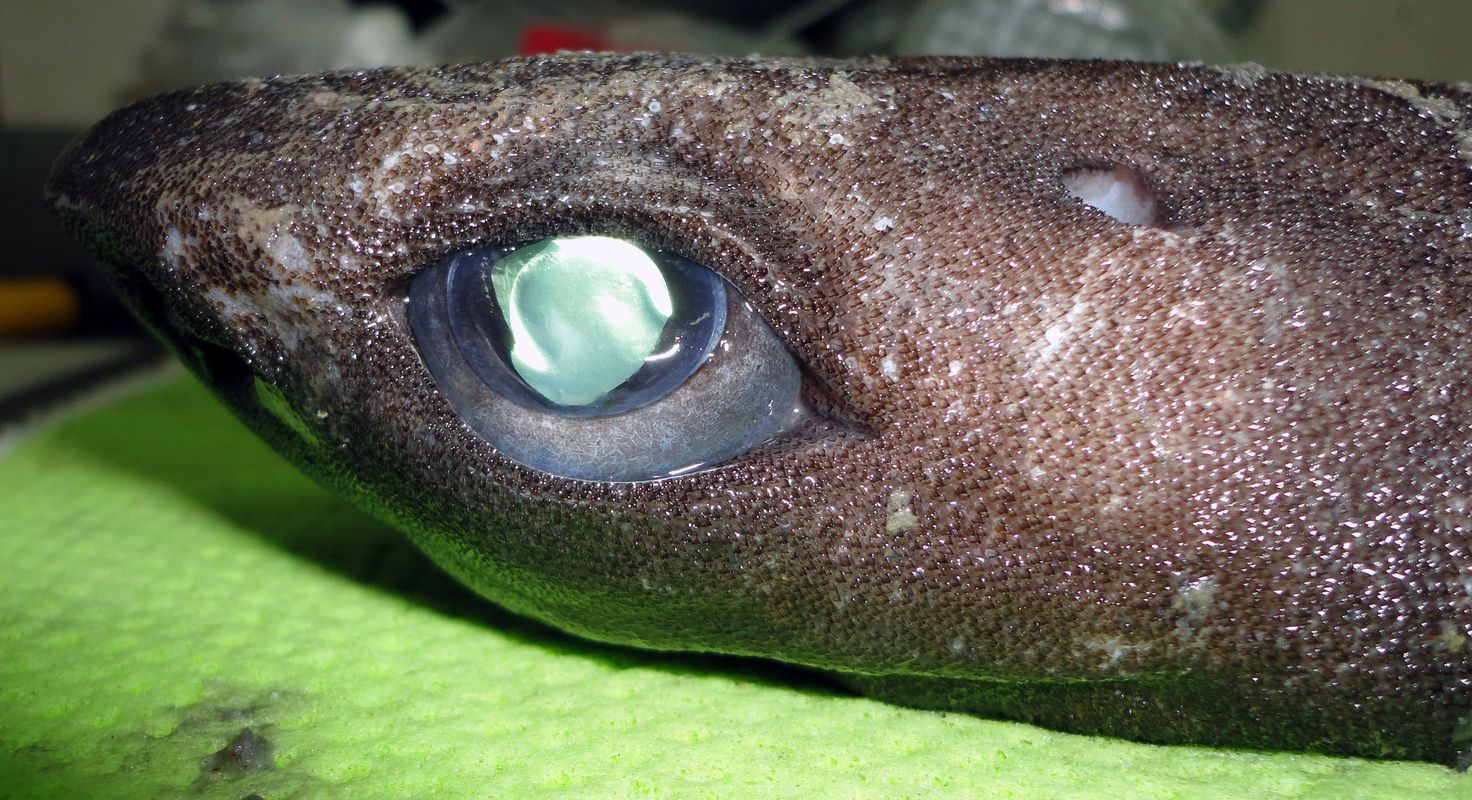
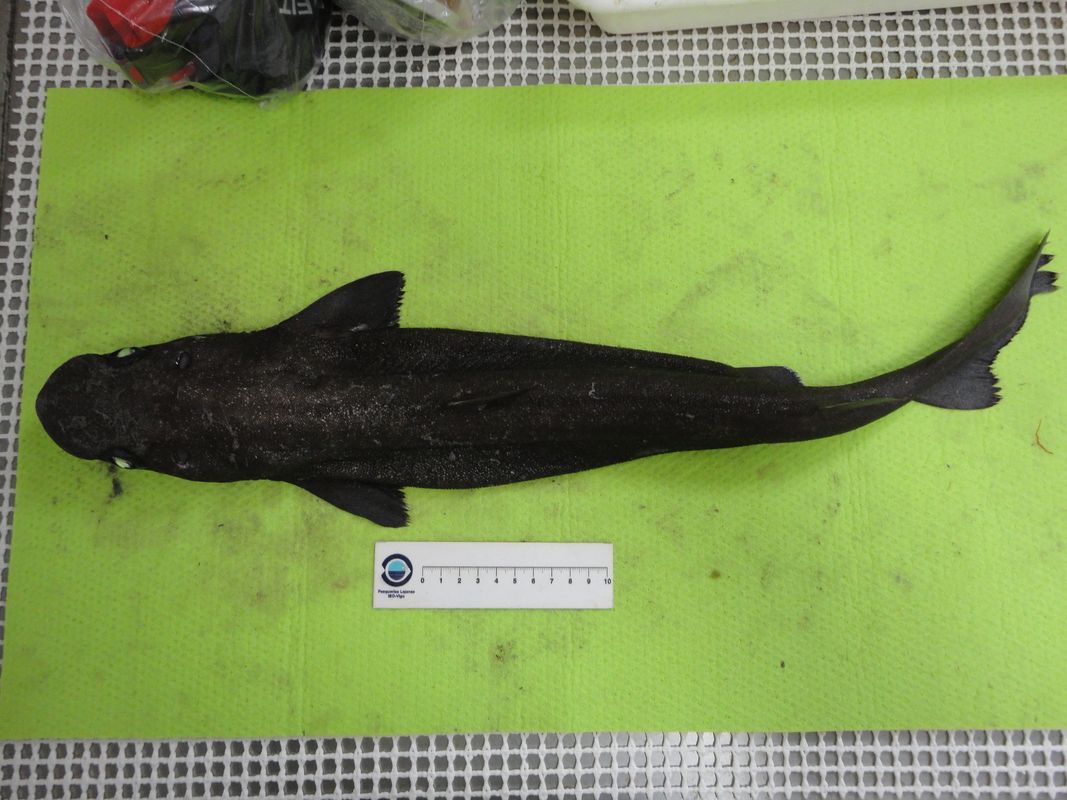
The Portuguese Dogfish typically reaches a length of 0.9 m (3 ft) for males and 1.0 m (3.3 ft) for females, though specimens up to 1.2 m (3.9 ft) long have been recorded. This species has a flattened, broadly rounded snout that is shorter than the mouth. The eyes are large and oval in shape, positioned laterally on the head and equipped with a reflective tapetum lucidum that produces a yellow-green eyeshine. Lanceolate upper teeth and bladelike lower teeth with short, oblique cusps. The body is thick and cylindrical except for the flattened belly. The two dorsal fins are small and of similar size and shape, each bearing a tiny grooved spine in front. The Portuguese Dogfish is relatively common and the dominant shark species in deeper waters. Maturity is reached at 75 cm (29.5 in) TL for males and 95 cm (37.4 in) Tl for females. Size at birth is 30 cm (11.8 in) TL.
Reproduction:
This species is ovoviviparous,where females have their eggs hatch within their body, with 13 to 29 pups per litter. Distinct pairing with embrace. Their gestation period is non-seasonal and the breeding cycle is non-continuous.
Habitat:
This shark occurs on or near the bottom of the continental slope and abyssal plain in depths from 270 to 3,700 m (886 to 12,139 ft). The Portuguese Dogfish is the deepest-living shark known. This species is found deeper in the Mediterranean, seldom occurring above a depth of 1,500 m (4,921 ft) and being most common at 2,500 – 3,000 m (8,202–9,843 ft). There may be several separate populations in the Atlantic, and shark in the Mediterranean and off Japan to be distinct as well.
Behaviour:
An active predator of mobile, relatively large organisms, this shark feeds mainly on cephalopods and bony fishes. It has also been known to take other sharks and invertebrates as well as scavenging from whale carcasses.
Conservation:
The species was caught as target and incidental catch in small scale and industrial fisheries in some locations using a variety of fishing gear. There has been a number of management measures implemented in recent years for deep-water sharks, and the species has refuge at depth. Still, there is high distribution overlap with intensive fishing pressure and a lack of species-specific management across its entire range. Population declines have been reported in part of its range but increasing trends in others. The Portuguese Dogfish is estimated to have undergone a population reduction of 20–29% over the past three generations (111 years) based on abundance data and actual levels of exploitation, and it is assessed as Near Threatened (close to meeting Vulnerable A2bd). The species has been utilised for its flesh and liver oil.
Further information is required on population size and trends of the Portuguese Shark, as well as interactions with fisheries across its range, particularly around Africa. There are some species-specific and general management arrangements of relevance in place in the Northeast Atlantic and the Southwest Pacific. Elsewhere, targeted deep-water shark fishing is not permitted in the South East Atlantic Fisheries Organization (SEAFO) Convention Area or under the Southern Indian Ocean Fisheries Agreement (SIOFA) (SIOFA 2019, SEAFO 2016). The species is considered a “key species of concern” within the SIOFA area (SIOFA 2019). Conservation measures are generally lacking elsewhere in the species’ patchy range.
Since 2010, the European Union Fisheries Council prohibited direct fishing for deep-water sharks, including the Portuguese Dogfish, in European Community and international waters, and in 2012, no allowances for bycatch were implemented (ICES-WGEF 2018). In 2017 and 2018, a restrictive bycatch allowance (10 t) was trialled, permitting limited landings of unavoidable catches of deep-water sharks in directed artisanal demersal longline fisheries for Black Scabbardfish (Aphanopus spp). Additional management actions for this region include banned use of trawls and gillnets in waters >200 m in Azores, Madeira and Canary Islands and international waters regulated by ICES (NEAFC regulatory Area); banned use of gillnets by European Union vessels at depths >600 m; maximum bycatch limits of deep-water shark in Hake (Merluccius merluccius) and Monkfish (Lophius spp) gillnet catches; area restrictions by vessel size and gear, gear restrictions (hook size, maximum number of hooks on longline gear), and a network of closed areas in Azorean waters; closure of the Condor seamount to deep-water fishing in 2010 (ICES-WGEF 2018). In addition, the General Fisheries Commission for the Mediterranean (GFCM) banned bottom trawling below depths of >1,000 m in the Mediterranean Sea in 2005.
In Australia, deep-water sharks, including the Portuguese Dogfish, are assessed and managed as a multi-species stock, divided into eastern and western zone fisheries (Patterson et al. 2018). These fisheries are subject to Total Allowable Catches (TACs). A combination of trawling closures in most of the Southern and Eastern Scalefish and Shark Fishery (SESSF) waters deeper than 700 m since 2005, as well as the closure of the South Tasman Rise Fishery in 2007 (Patterson et al. 2018), may indirectly offer this species some refuge in this region.
Do you have images or videos of Portuguese Dogfishs?
Submit them to [email protected].


Donate Now | Team Sharkwater Newsletter | Group Sales | Shark Database | #SharkFree
Contact Us | Press | Partners | Terms of Use | Privacy Policy
© 2026 Sharkwater Productions - The Truth Will Surface 🦈