


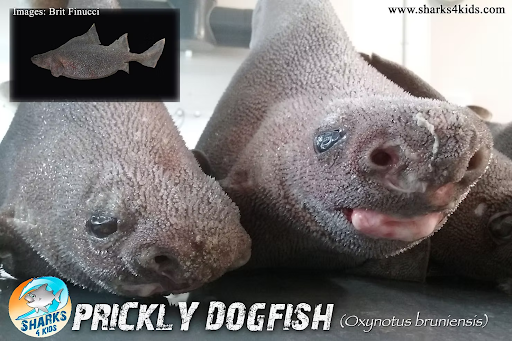
Prickly Dogfish is a deep-sea shark known for its rough grey-brown skin. They can be found in the southwest Pacific and the eastern Indian Ocean off the coast of Australia and New Zealand. Prickly dogfish can occur at 1070 m (3,510 ft) underwater, but they are commonly found between 350 m and 650 m (1,148 ft and 2,133 ft).
Biology and Behaviour
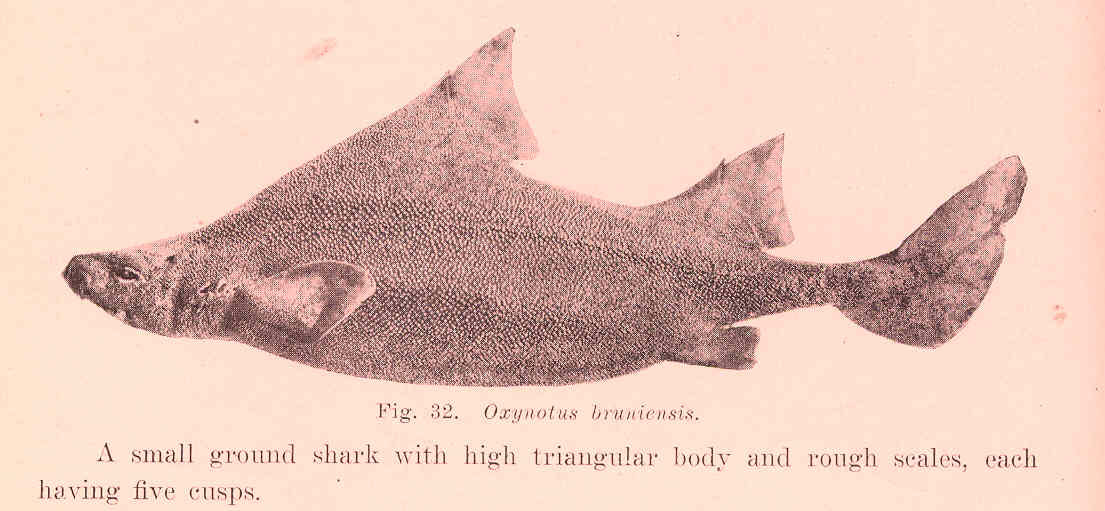
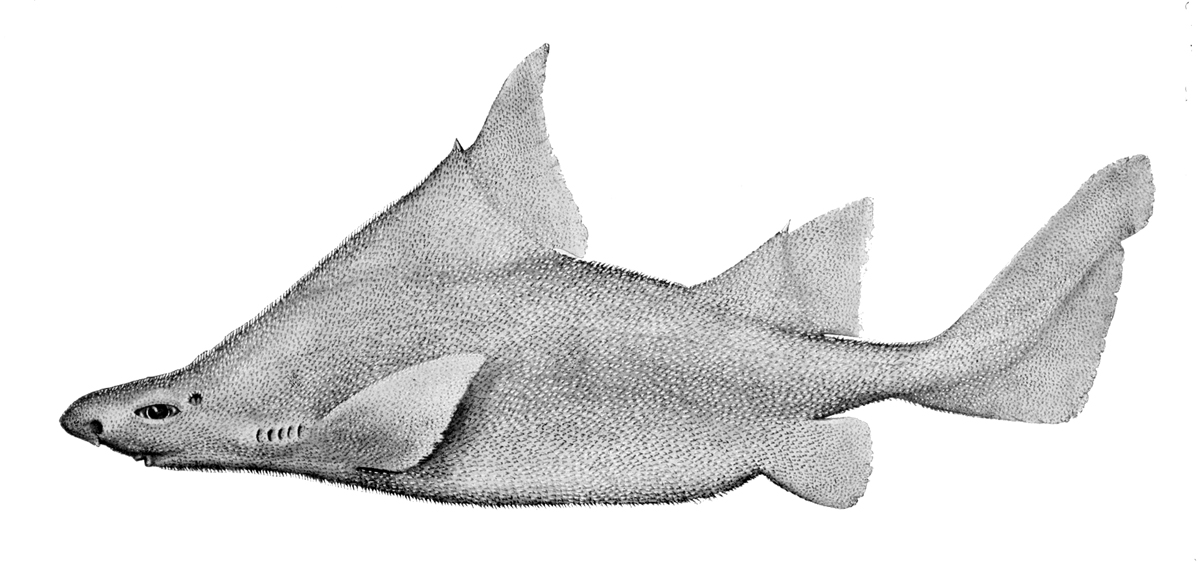
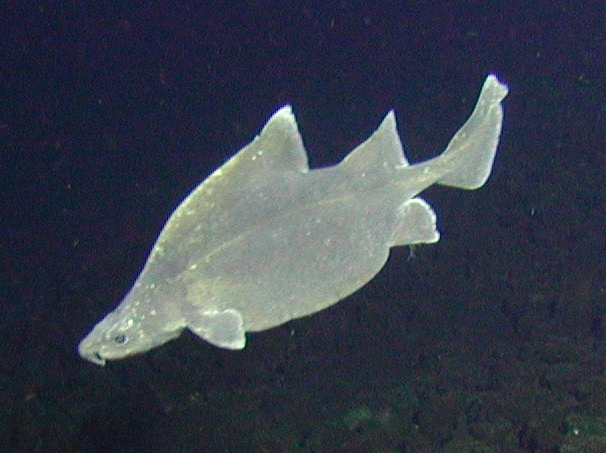
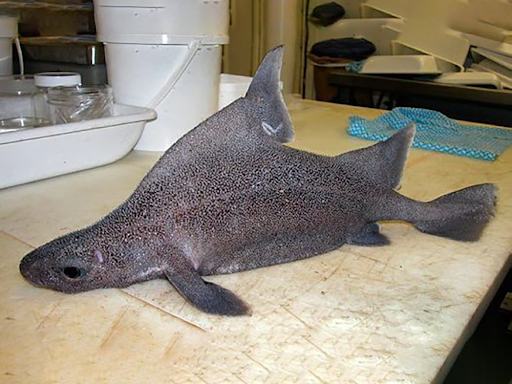
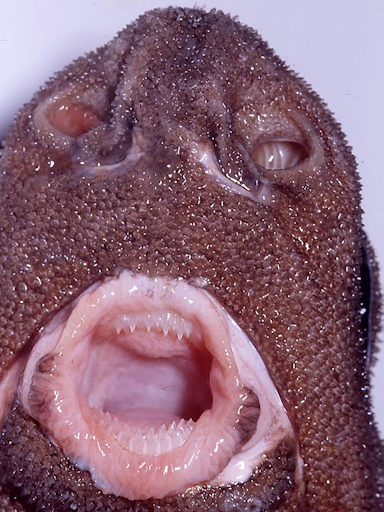
Prickly dogfish have a short rounded, blunt snout with large nostrils that are closely spaced; a triangular cross-section; two high sail-like dorsal fins with spines and broad apices. Their upper teeth are lance-shaped and bottom teeth are blade-like. Its underside is off-white and flat to lay on the bottom of the sea floor. It has five pairs of gill slits near its first dorsal fin. Because of the shape of their body and sizeable oily liver, prickly dogfish are presumably slow swimmers.
Prickly dogfish a lot of spend time on the seabed so they eat invertebrates and fish that live at the bottom of the ocean.
Reproduction and Lifespan
There is little known about Prickly dogfish, but they are ovoviviparous where females have their eggs hatch within their body. Their reproduction rate is low at about seven to eight pups. At birth, young Prickly dogfishes are 24 cm (9.4 in) long. Males are fully matured at 55 to 60 cm (21.7 to 23.6 in), while females reach between 67 to 72 cm (26.4 to 28.3 in).
Conservation and Tourism
The Prickly Dogfish is taken incidentally in deepwater benthic trawl fisheries and its core depth range overlaps with fisheries operating throughout much of its range. There are well documented collapses of upper slope deepwater sharks off southeastern Australia, with a high likelihood that the Prickly Dogfish has declined due to long histories of trawling where it occurs. This species is susceptible to capture, and mortality of discards is unknown but are considered high. Oxynotus spp are highly susceptible to population decline from fishing, and populations of other species in the Mediterranean and Northeast Atlantic have declined by an estimated 80% over three generations, or disappeared altogether, in areas with high fishing effort. There are no species-specific conservation measures in place for Prickly Dogfish, and it is unknown what effect, if any, current fisheries and closed area management strategies have for this species.
Based on its low productivity, susceptibility to capture, high fishing overlap through much of its range with documented upper slope shark declines in some areas, a population decline of 20-30% is inferred over the last three generations (60 years) based on actual levels of exploitation. The Prickly Dogfish is therefore listed as Near Threatened (close to meeting Vulnerable A2d). This species is not likely to be utilized, and has historically been discarded (Walker and Gason 2007, Ministry of Fisheries 2008).
Further information is required on the life history, population, and fisheries interactions of Prickly Dogfish. Although no species-specific management is in place, some management arrangements in New Zealand and Australia are relevant to this species.
New Zealand has had a Quota Management System (QMS) in place since 1986 to provide for the sustainable management of its fisheries. Prickly Dogfish is a non-QMS species, meaning that there is no species-specific management in place for the species (MPI 2013). New Zealand has a system of Benthic Protected Areas (BPAs), however they are unlikely to provide any major refuge for this species given the spatial occurrence of the BPAs (see Black and Tilney 2015). This species has been recorded from the Kermadec Ridge where no benthic trawling occurs (Ford et al. 2015).
In Australia, trawling closures in most of the Southern and Eastern Scalefish and Shark Fishery (SESSF) waters deeper than 700 m since 2005 (Patterson et al. 2016) may indirectly offer this species some refuge in this region. However, this is beyond the core depth range of the species. The species may also receive some refuge in closed areas of the Australian Commonwealth Marine Reserve network.
Do you have images or videos of Prickly Dogfishs?
Submit them to [email protected].



Donate Now | Team Sharkwater Newsletter | Group Sales | Shark Database | #SharkFree
Contact Us | Press | Partners | Terms of Use | Privacy Policy
© 2026 Sharkwater Productions - The Truth Will Surface 🦈