


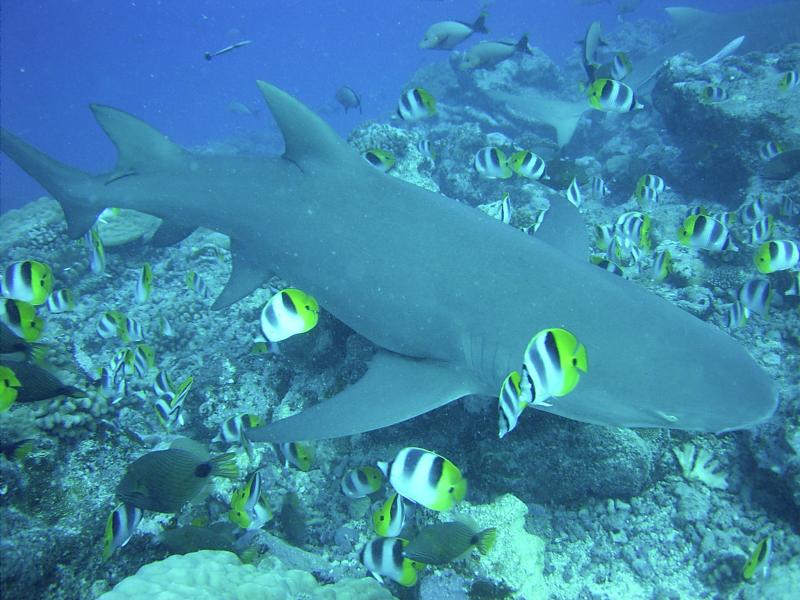
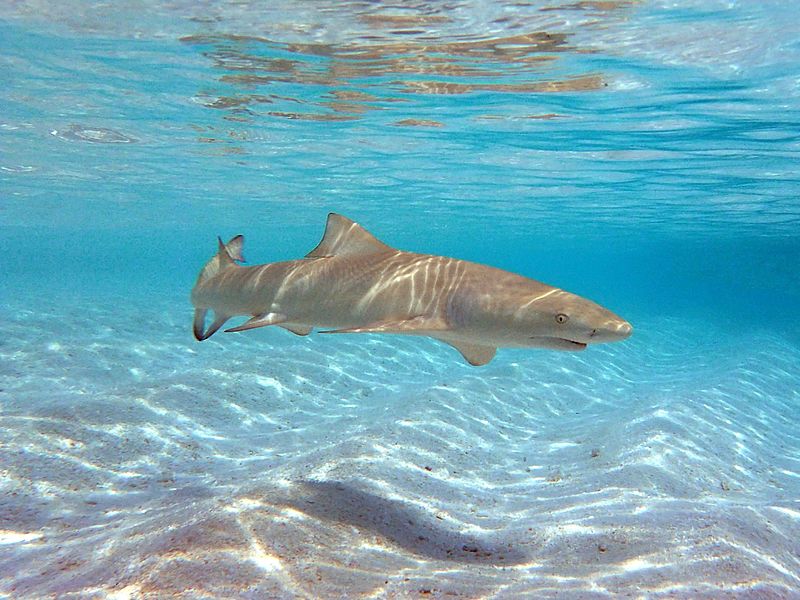
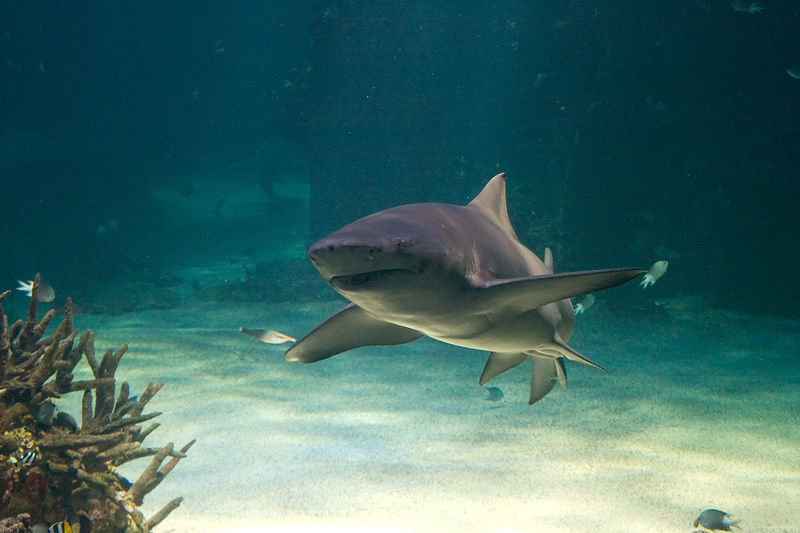
The Sharptooth Lemon Shark is a large, stocky, yellowish shark found in the tropical Indo-west and central Pacific oceans, extending from South Africa to Australia and Oceania regions.
This species is found on continental and insular shelves and terraces, often on and around coral reefs and sandy plateaus and in lagoons, estuaries, and mangrove swamps.
Biology and Behaviour:
The Sharptooth Lemon Shark is born in litters of one to 14 pups after a 10 to 11-month gestation (pregnancy) period, every two years. Each pup is around 60 cm (23.6 in) at birth and can grow to 310 cm (122 in) in total length. Both male and female reach maturity at 220 cm (86.6 in). Viviparous, meaning live birth.
This shark species do not tend to migrate far, often staying in the same region of waters. They can be found from the surface of the water down to at least 30 metres (98 ft) deep. They feed on smaller sharks, stingrays and on benthic bony fish (bottom-of-the-ocean-feeders).
Conservation and Tourism:
It is caught as target and bycatch through much of its range in industrial and small-scale fisheries using longline, gillnet, handline, and demersal trawl. This species is also threatened by declines in habitat quality of coral reefs due to climate change, destructive fishing practices, and poor water quality; and mangroves from deforestation and coastal development. While there is limited species-specific data available, it is likely to have undergone declines based on its large size and presumably low productivity, and intensive coastal fisheries through much of its range. Landings surveys, dive surveys, diver interviews, and anecdotal evidence indicate substantial declines over the past three generations lengths (50 years). Results from baited remote underwater video system surveys of coral reefs across its range (242 reefs in 36 nations) indicate that the species has declined to very low levels through much of its range in Asia and Africa, but remains common in Australia, and in some island nations of the Pacific and Indian Oceans. It is estimated that the Sharptooth Lemon Shark has undergone a population reduction of 50–79% over the last three generation lengths (50 years) due to levels of exploitation and declines in habitat quality, and it is assessed as Endangered A2bcd.
Within Australian waters, this species is wide-ranging and captured in small numbers in gillnets, beach-meshing and longlines on the east coast and Northern Territory. Outside Australia, it is heavily fished in unregulated and expanding inshore fisheries.
Their meat is utilized fresh and dried salted for human consumption, their fins are used for shark-fin soup base, and their liver oil for vitamins.
The Sharptooth Lemon Shark is also valuable for dive tourism and can be harmful only if provoked.
Currently, there are no conservation measures in place for this species.
The reliance of the Sharptooth Lemon Shark on coral reefs makes it susceptible to declines in habitat quality. Global climate change has already resulted in large-scale coral bleaching events with increasing frequency causing worldwide reef degradation. Almost all warm-water coral reefs are projected to suffer significant losses of area and local extinctions, even if global warming is limited to 1.5ºC (IPCC Report, 2019). Destructive fishing practices in some nations (e.g. dynamite fishing) (McManus 1997) and declining water quality (MacNeil et al. 2019) have also led to the decline in coral reef habitat.
The reliance of this species on mangrove habitats, especially as pupping and nursery grounds makes them susceptible to declines in habitat quality. The extent of mangrove habitat has declined markedly, with 20-35% of areas lost during the last half of the 20th century (Polidoro et al. 2010) as a result of coastal development for urbanisation, aquaculture and agriculture, timber harvesting sand resource extraction (Goldberg et al. 2020). Listed on CITES Appendix II in 2023, meaning international trade is regulated and monitored.
Do you have images or videos of Sharptooth Lemon Sharks?
Submit them to [email protected].


Donate Now | Team Sharkwater Newsletter | Group Sales | Shark Database | #SharkFree
Contact Us | Press | Partners | Terms of Use | Privacy Policy
© 2026 Sharkwater Productions - The Truth Will Surface 🦈