


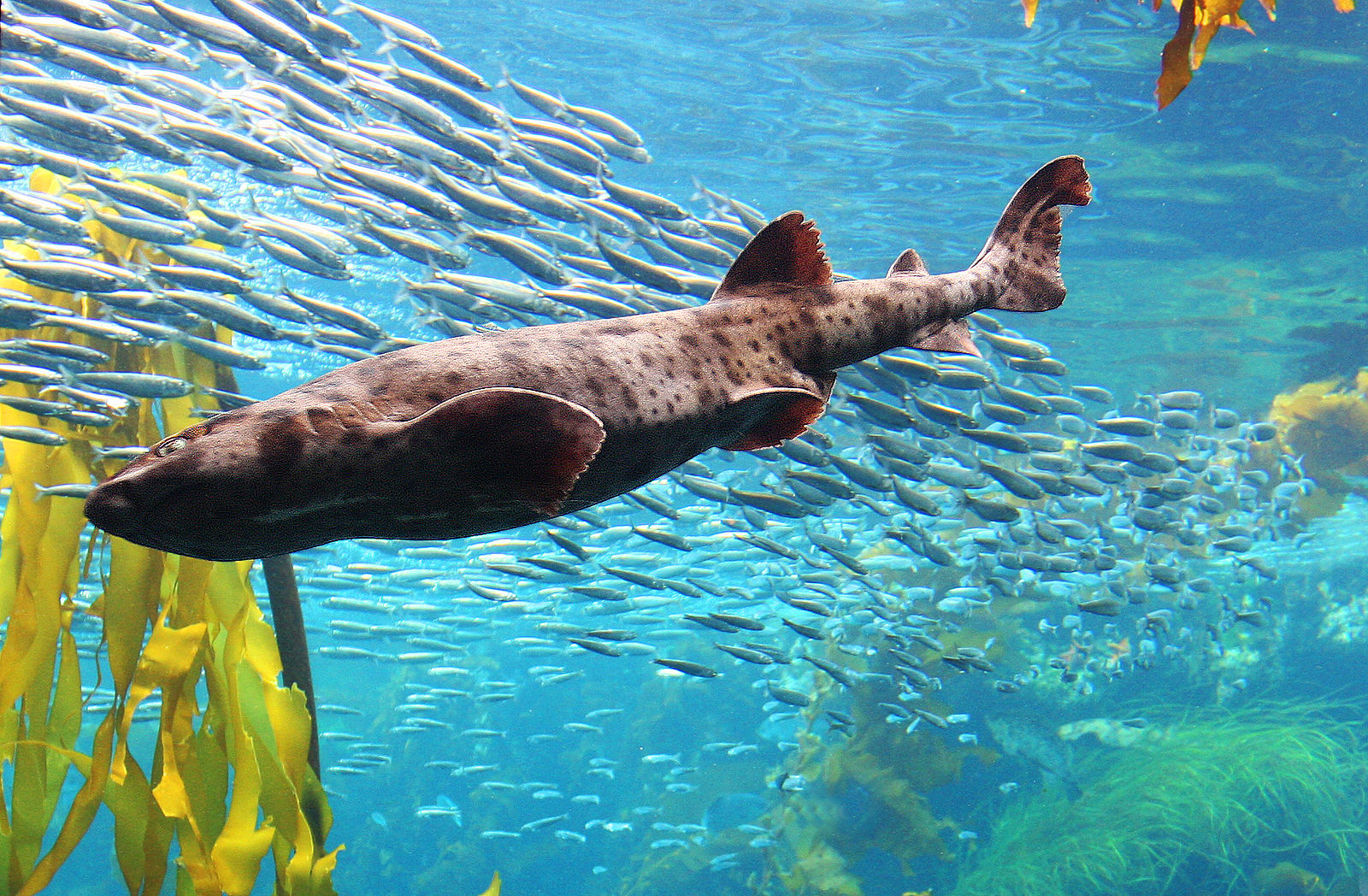
The swell shark is a species of catshark found in the Pacific, from California to Southern Mexico. There’s also a second population in Chile. Their name comes from their ability to inflate themselves to twice their body size by swallowing water.
These sharks are found near the bottom, usually at depths of about 5 to 40 m, although some individuals go as low as 400 m. They’re usually round algae-covered rock bottom crevices. They’re gregarious and are found usually in groups. They’re nocturnal and sleep during the day. They eat fish, mollusks, and crustaceans.
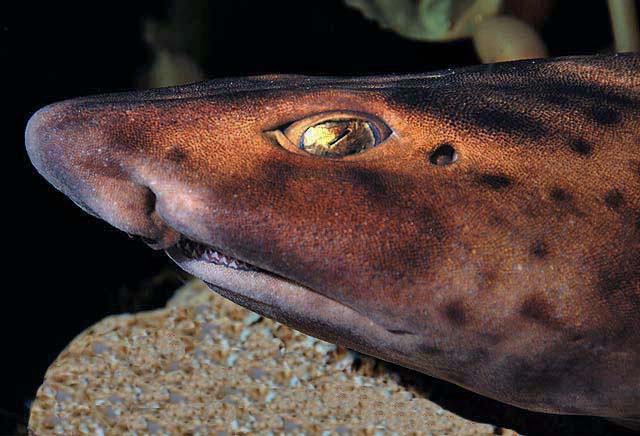
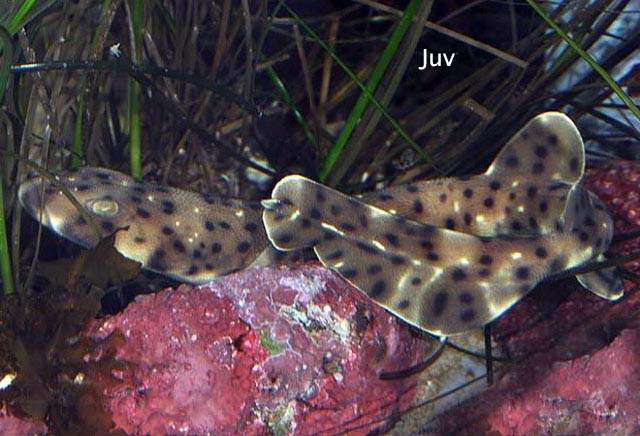
They are about 90 cm long, with some reaching up to 110 cm. They have flat broad heads and golden eyes. They’re brownish yellow, with black and white spots.
Swell sharks are oviparous and lay three eggs at a time. The embryo stays in the egg for up to a year and hatches when it’s about 15 cm long.
When attacked by a larger predator, it bites its own tail and sucks in water. This makes it harder to bite.
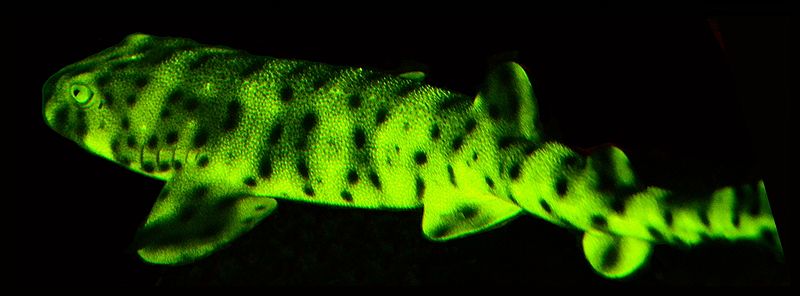
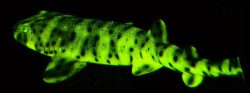
There have been reports of bioluminescence in swell sharks. This could be a method intraspecies communication.
The species is caught incidentally in low numbers in many gear types, including trap, net, longline, hook and line, and trawl fisheries. The species’ nocturnal behaviour, and preference for unfishable grounds (e.g., caves) may provide the Swell Shark with some refuge from fishing activities. There is no evidence of population decline and the species is not suspected to be reaching the population reduction threshold. Therefore, the Swell Shark is assessed as Least Concern.
There are no species-specific management measures in place for the Swell Shark. Along the United States coast (Oregon and California), ground fisheries are managed by a federal Groundfish Fishery Management Plan, although this species is not a focal species of the plan. In California, a network of 29 marine protected areas (MPAs) were implemented in 2007 under California’s Marine Life Protection Act, representing approximately 204 square miles (~18%) of state waters in the central coast region (California Department of Fish and Wildlife 2015). In the Mexican Pacific, there is a closed season for targeted elasmobranch fishing from 1 May–31 July, but enforcement is inadequate (Pollom et al. 2020). Further research is needed on population size and trends, and life history, and catch rates should be monitored.
Do you have images or videos of Swellsharks?
Submit them to [email protected].


Donate Now | Team Sharkwater Newsletter | Group Sales | Shark Database | #SharkFree
Contact Us | Press | Partners | Terms of Use | Privacy Policy
© 2026 Sharkwater Productions - The Truth Will Surface 🦈