


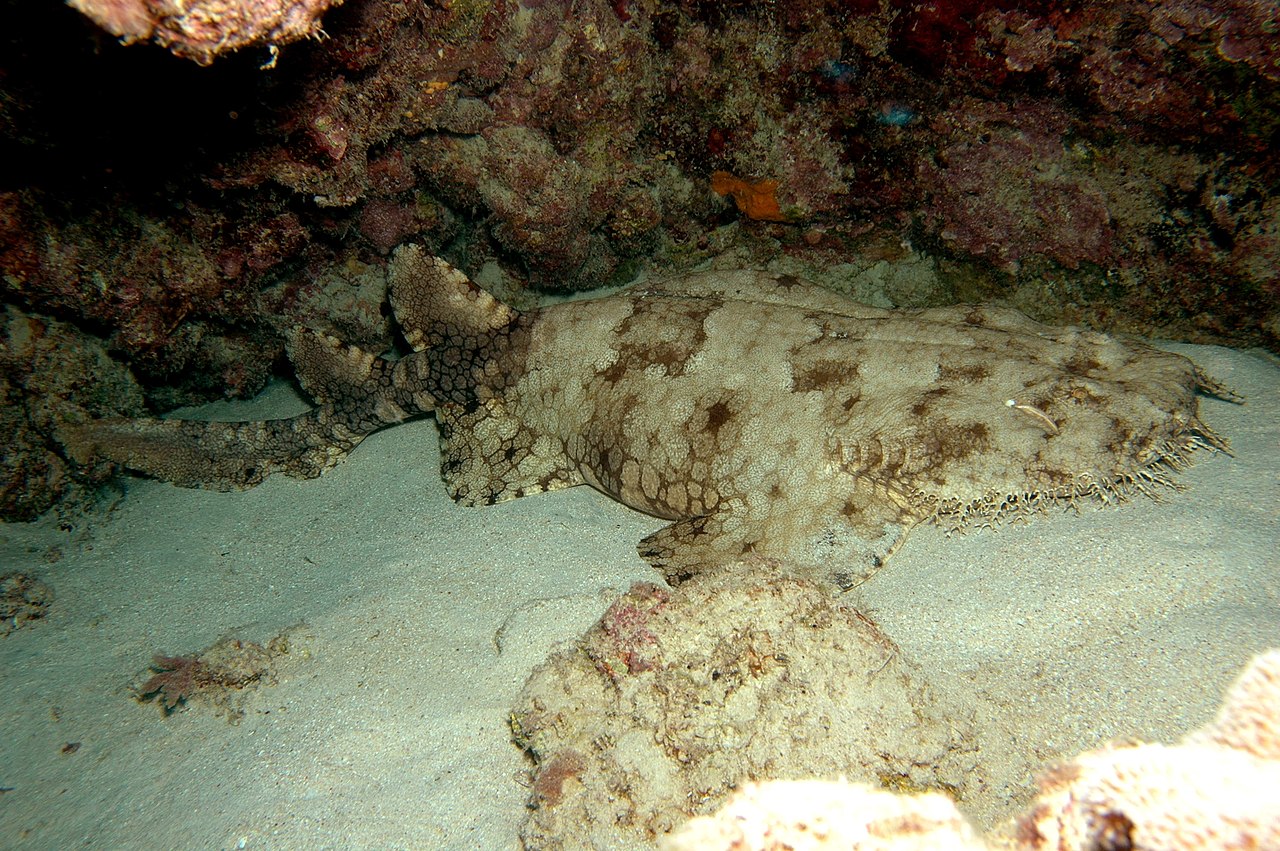
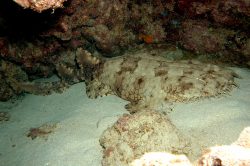
The Tasselled wobbegong shark is reef-associated carpet shark native to the Indo-West Pacific. It’s found in areas like eastern Indonesia, Papua New Guinea, and northern Australia, and commonly encountered on the Great Barrier Reef.
Biology:
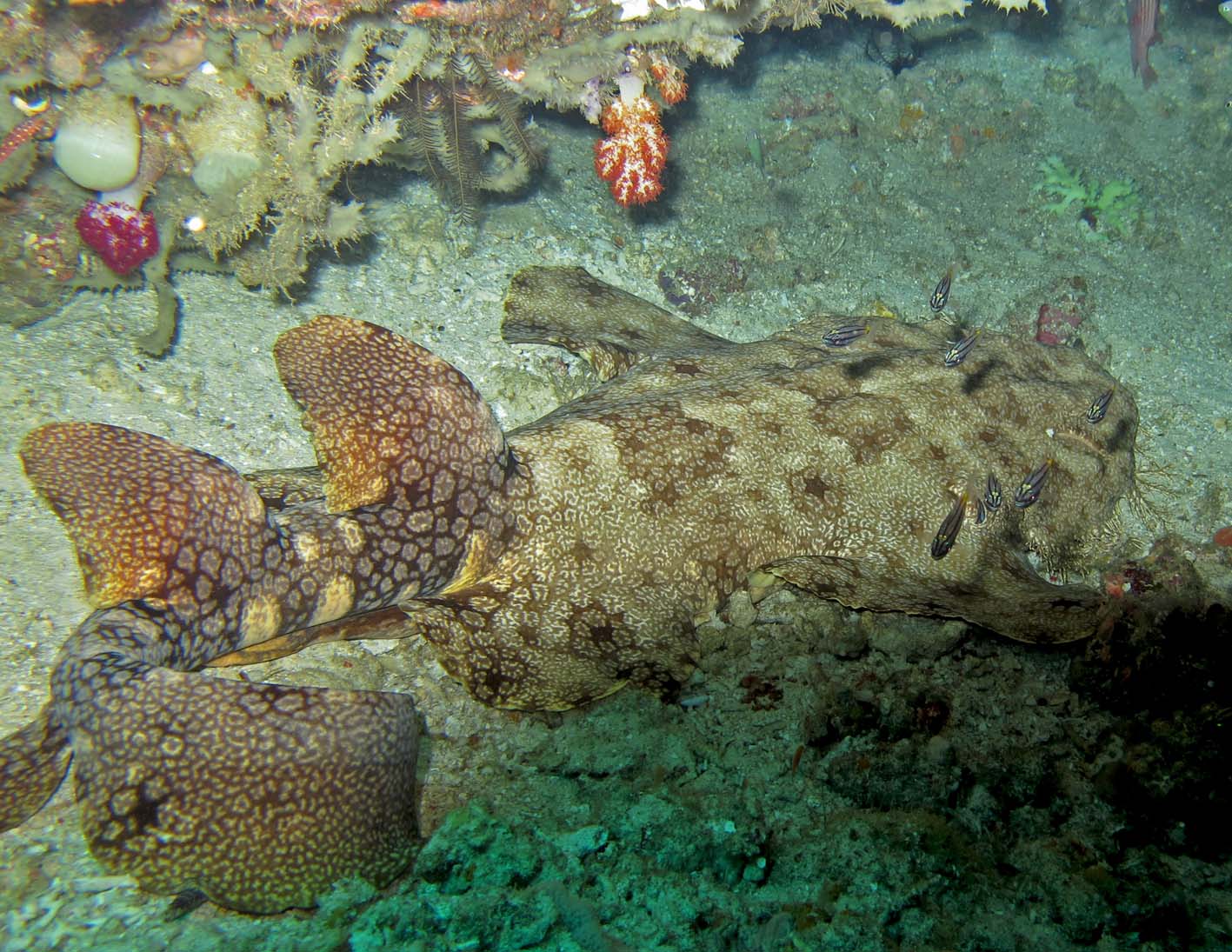
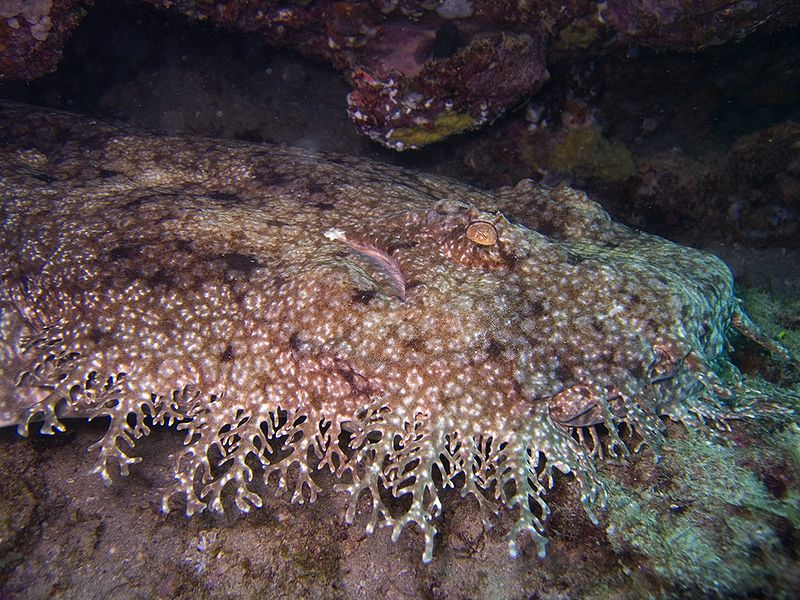
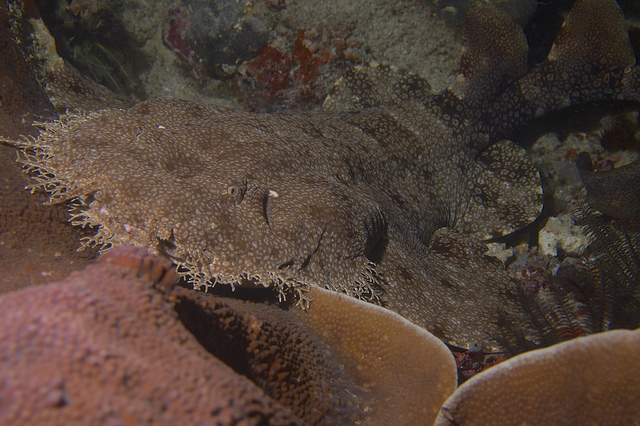
The Tasselled wobbegong shark is a medium sized shark that has a body with a reticular pattern of narrow dark lines. Their maximum reported length is 125 cm/4.10 ft. They have a distinctive series of branching skin flaps from its head to its chin. Their tail resembles a small fish, and they wave it to attract prey.
Reproduction:
The Tasselled wobbegong shark matures at about 115 cm/3.77 ft in length. This species of shark gives birth to live pups, about 20 cm/0.66 ft long.
Behaviour:
The Tasselled wobbegong shark feeds on bottom fishes and invertebrates, also known to eat nocturnal teleost fishes such as squirrelfish and soldierfish and sweepers. This species is commonly seen on coral heads and in reef channels and faces, in shallow areas of the continental shelf and offshore reefs, to about 50 m/164 ft depth. Primarily nocturnal, individuals are thought to have a small home range, not traveling far.
Conservation:
This species is not targeted and is rarely caught as bycatch. Populations are stable and they’re currently considered least concern. In Australia, it is a rare incidental catch in commercial trawl fisheries likely due to the lack of trawling in its preferred habitat and is not retained due to a trawl retention prohibition of sharks and rays. It is considered at low risk from northern Australian commercial fisheries because of its low susceptibility to capture. It is an occasional recreational catch though mostly discarded with likely high post-release survival. Marine parks in Australia provide significant refuge. The species may be occasionally taken by small-scale fisheries in New Guinea. There are currently no significant threats to the species, no evidence of population decline, and the species is not suspected to be close to reaching the population threshold. Therefore, the Tasselled Wobbegong is assessed as Least Concern.
In Australia, wobbegong (family Orectolobidae) flesh is sold locally for human consumption through ‘fish and chip’ and fresh fish retail outlets. Most commercially landed wobbegong catch however, is comprised of larger species than the Tasselled Wobbegong. Due to their low commercial value, smaller wobbegongs are usually released alive. Wobbegong fins have no known commercial value. Historically, the attractive Tasselled Wobbegong skin was occasionally used as decorative leather (Last and Stevens 2009). It is targeted for the home and public aquaria trade with trade ongoing in 2023 (Furlani et al. 2007, Patterson et al. 2022). In some areas, it is a tourist attraction for divers. In West Papua, Indonesia, it is possibly used for its meat (dried and salted), skin, and cartilage as reported for other wobbegong species (White et al. 2006).
There are currently no species-specific conservation measures in place for this species. However, site attached species such as the Tasselled Wobbegong benefit from habitat protection and suitably designed and implemented no-take zones, where all forms of harvesting or fishing are excluded (Huveneers et al. 2006, Lee 2014). In Australia, the Tasselled Wobbegong benefits from occurring in the no-take zones within the Great Barrier Reef Marine Park on the east coast and Ningaloo Marine Park on the west coast. On the west coast, the species also has significant refuge because more than 90% of the area within the 200 m isobath may never have been trawled due to a combination of spatial trawl closures and marine parks (Gaughan and Santoro 2021). Within Australia, all sharks and rays are prohibited from retention in trawl fisheries and in Western Australia, retention of sharks and rays is prohibited in all commercial fisheries other than the State’s managed shark fishery. Further research is needed on population size and trends, and life history, and catch rates should be monitored.
Do you have images or videos of Tasselled Wobbegongs?
Submit them to [email protected].



Donate Now | Team Sharkwater Newsletter | Group Sales | Shark Database | #SharkFree
Contact Us | Press | Partners | Terms of Use | Privacy Policy
© 2026 Sharkwater Productions - The Truth Will Surface 🦈