


The tawny nurse shark is a bottom feeder found on continental and insular shelves. They are native to the Indian and Pacific oceans. They occur in places like the Persian Gulf, the Red Sea and East Africa as well as Japan and Australia.
Biology:
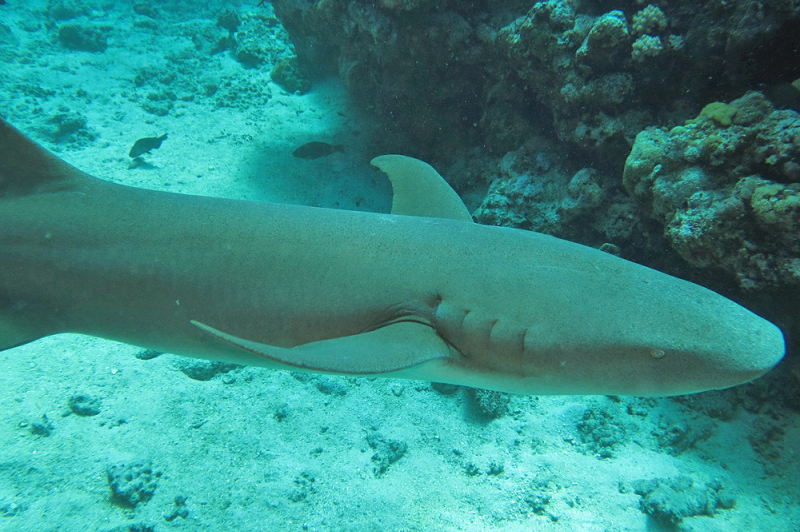
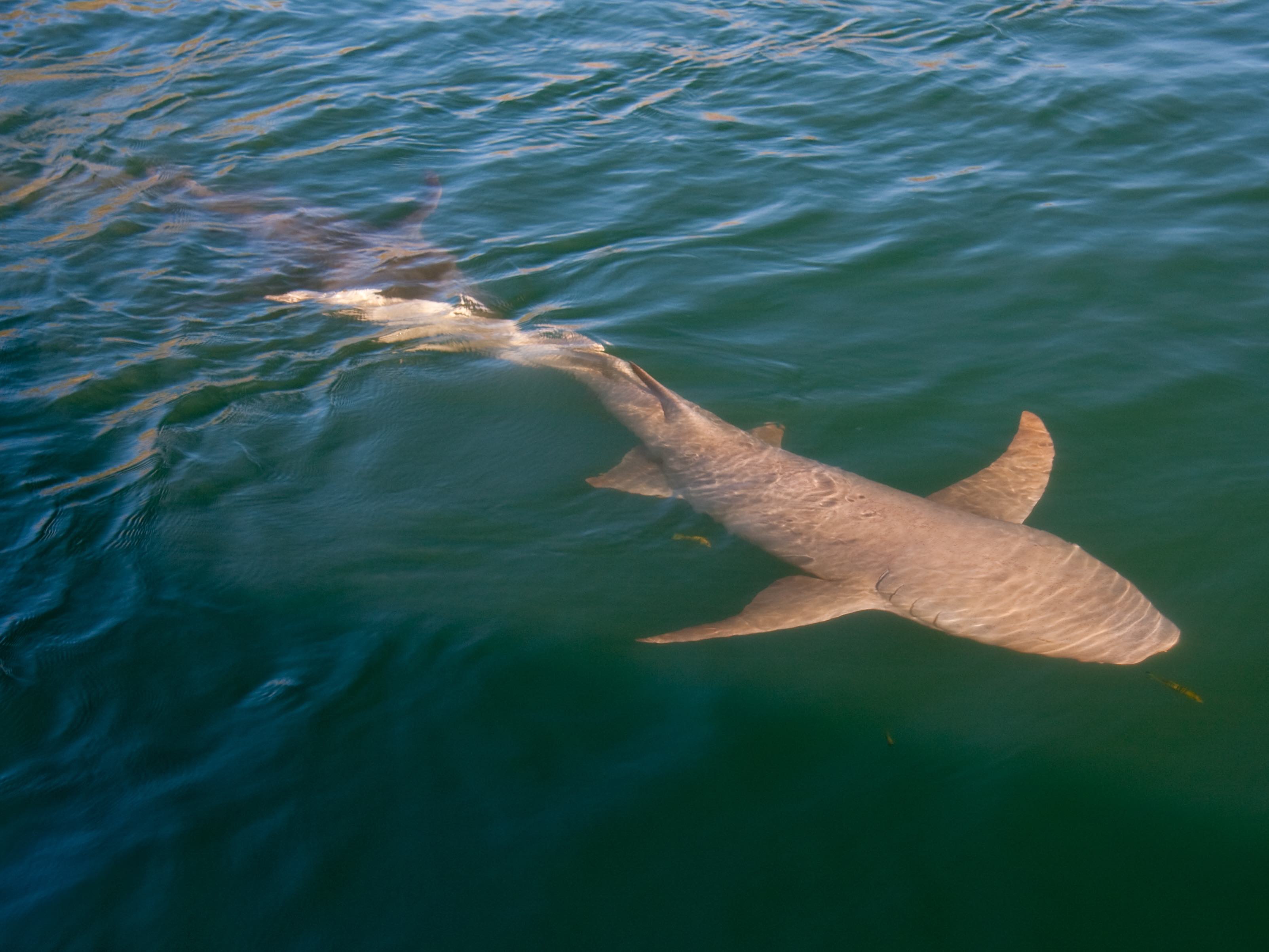
The tawny nurse shark has a lengthy body and tail, a large bulky head, and a small mouth with small comb-like teeth. The pectoral fins are long and curved like hooks. The maximum length that has been recorded is 3.2 m/10.5 ft while the common length of a Tawny nurse shark is about 2.5 m/8.2 ft.
Reproduction:
They are ovoviviparous, which means their eggs hatch inside the mother and the pups feed on unfertilized eggs. Litter sizes are usually 4 pups, and they’re born ranging from 40 to 80 cm/1.31–2.62 ft in length. Tawny nurse sharks become sexually mature when they reach about 2.3 m/7.5 ft in length.
Behaviour:
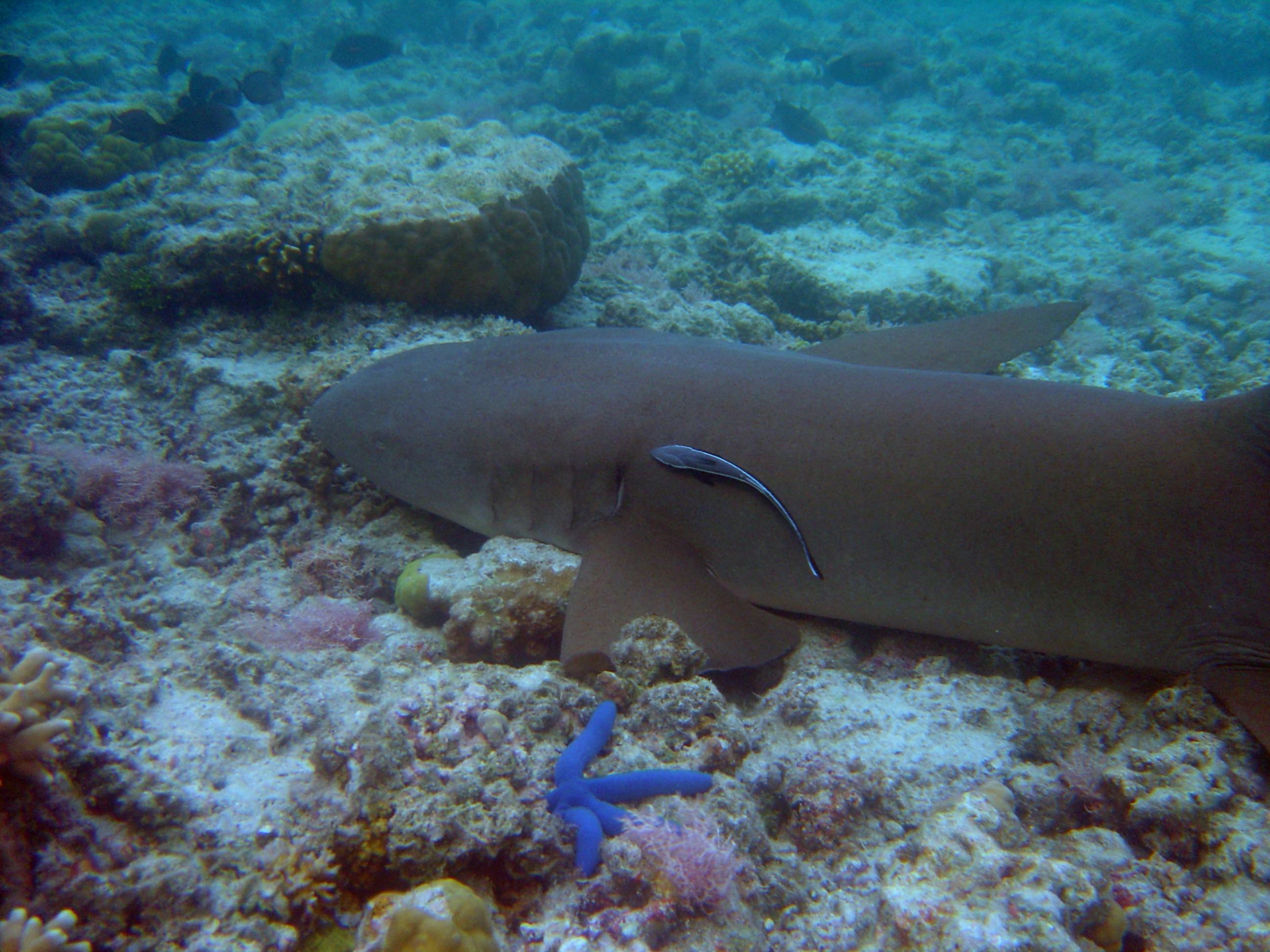
Tawny nurse sharks can often be found on or near the bottom of the sea, in lagoons, or along the outer edges of coral and rocky reefs. They’re found in sandy areas near reefs and off sandy beaches. They prefer crevices and caves on reefs. They are commonly nocturnal but may be active during the day. They rest in groups often seen piled across or on top of one another. The Tawny nurse shark feeds on a wide variety of bottom-dwelling invertebrates. They are usually docile and known to allow itself to be touched but a few non-fatal attacks have been recorded.
Conservation:
It is caught as target and bycatch through much of its range in industrial and small-scale fisheries using longline, gillnet, handline, and demersal trawls. In some locations it is retained live for the aquarium trade, but in general is of relatively low value and often not retained. This species is also threatened by declines in habitat quality of coral reefs due to climate change, destructive fishing practices, and poor water quality. Results from baited remote underwater video system surveys of coral reefs across its range (242 reefs in 37 nations) suggest that the species has declined to very low levels through much of its range in Asia and Africa, but remains common in Australia, southern Red Sea and many of the island nations of the Pacific and Indian Oceans. It is estimated that the Tawny Nurse Shark has undergone a population reduction of 30–49% over the last three generation lengths (90 years) due to levels of exploitation and declines in habitat quality, and it is assessed as Vulnerable A2bcd.
The Tawny Nursh Shark is sold whole for local consumption in India, Pakistan, Sri Lanka, Bangladesh, Myanmar, Indonesia, and the Philippines. The fins are not considered valuable but can occur in the trade. It is also displayed and bred in aquaria worldwide, with live export from Indonesia and Australia.
There are few species-specific regulations in place to protect this species. There are many general management measures that contribute to conserving this species in many range states. Marine Protected Areas are common in coral reef areas throughout its range, but only those that are sufficiently large and well enforced provide refuge for reef associated sharks (MacNeil et al. 2020). Shark sanctuaries, where targeted shark fishing is banned within a nations entire Exclusive Economic Zones (EEZs), provide benefits to reef sharks (MacNeil et al. 2020) and cover significant parts of the range, especially in the Pacific. The use of Turtle Excluder Devices (TEDs) has been shown to be an effective way to reduce the catches of large sharks, including this species, in prawn and shrimp trawls (Campbell et al. 2020). Further research is needed on population size and trend, and life history, and catch rates should be monitored.
Do you have images or videos of Tawny Nurse Sharks?
Submit them to [email protected].



Donate Now | Team Sharkwater Newsletter | Group Sales | Shark Database | #SharkFree
Contact Us | Press | Partners | Terms of Use | Privacy Policy
© 2026 Sharkwater Productions - The Truth Will Surface 🦈