


The Western wobbegong shark is a carpet shark found in tropical waters of the Eastern Indian Ocean. This species lives in shallow water, in the continental shelf and is commonly found off south-west Australia.
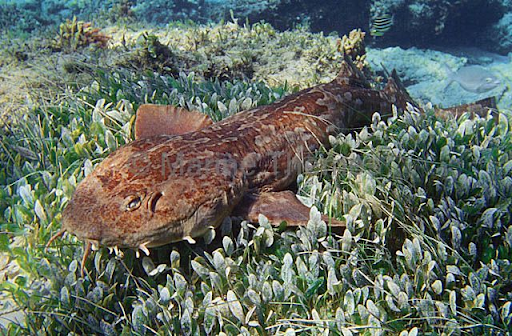
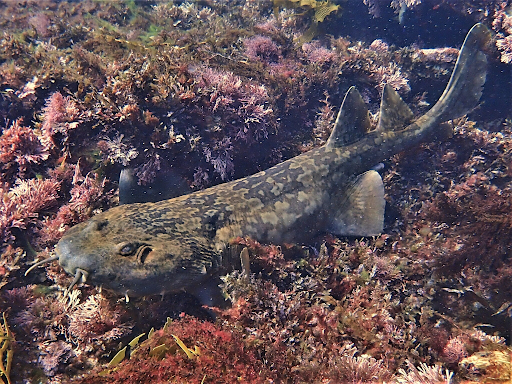
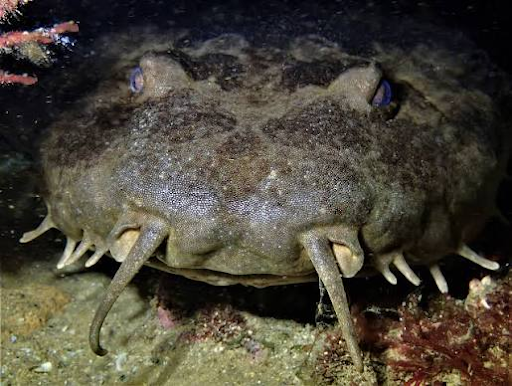
The Western wobbegong shark is yellowish-brown with well-defined darker brown saddles and white spots, blotches or patterns on the fins and body. The maximum length of a western wobbegong shark is about 149cm/4.89 ft.
Females breed every two or three years and produce 18-29 young per litter, with a gestation period of 9-11 months. The Young are born at 22 to 26cm (8.7–10.2 in) in length. They become sexually mature at about 111cm /3.64 ft in length.
The live anywhere in from the surface to about 80 m/262 ft deep, but sometimes they venture deeper to about 100 m/328 ft below the surface.
The species is sometimes caught as bycatch, but not in enough numbers to threaten its population numbers. The IUCN considers a species of least concern.
The Western Wobbegong is primarily caught in low levels in the Western Australian Temperate Demersal Gillnet and Demersal Longline Fishery (TDGDLF). For wobbegongs (Orectolobidae spp.) generally, ~65 tonnes (t) were estimated to have been landed in this fishery annually from 1994–1999, ~40 t from 1999–2014, and ~28 t from 2014–2022, with these declines in total wobbegong catches reflecting large reductions in fishing effort and other fishery controls enforced during this time. The Western Wobbegong are estimated to only constitute a minor portion of these total wobbegong catches, with less than ~2 t estimated annually since the mid–1990s, and ~367 kg from 2014–2022. Across 1993–2020, this species constituted 1% of total elasmobranch catch in gillnets in the TDGDLF. Some recreational catch likely occurs, and while species-specific information is lacking, it is likely at lower levels than commercial catch. The Western Wobbegong are likely to almost always be discarded when caught in the TDGDLF, and like other wobbegong species, post-release survival is thought to be high. There is nothing to infer or suspect population reduction at this time and the Western Wobbegong is assessed as Least Concern.
There are no specific measures in place. Retention of sharks and rays outside of specifically managed shark fisheries has been prohibited in Western Australia since 2006 (Evans and Molony 2010), with stringent fishery controls on catch, gear, effort, and spatial exclusions also in place (Braccini et al. 2021a). This species also benefits from the various marine protected areas in the Australian Commonwealth South-west Marine Parks Network and state managed marine parks and reserves within the West Coast Bioregion that overlap with its range, which includes zoning, gear restrictions, and fishery exclusion areas (DPIRD WA 2025, Parks Australia 2025). In 2021, the national Red List status of this species was Least Concern and in 2023, the stock was assessed as Sustainable (Kyne et al. 2021, Simpfendorfer and Rigby 2023). Further research is needed on population size and trends, life history, and catch rates should be monitored.
Do you have images or videos of Western Wobbegongs?
Submit them to [email protected].


Donate Now | Team Sharkwater Newsletter | Group Sales | Shark Database | #SharkFree
Contact Us | Press | Partners | Terms of Use | Privacy Policy
© 2026 Sharkwater Productions - The Truth Will Surface 🦈