


Intro:
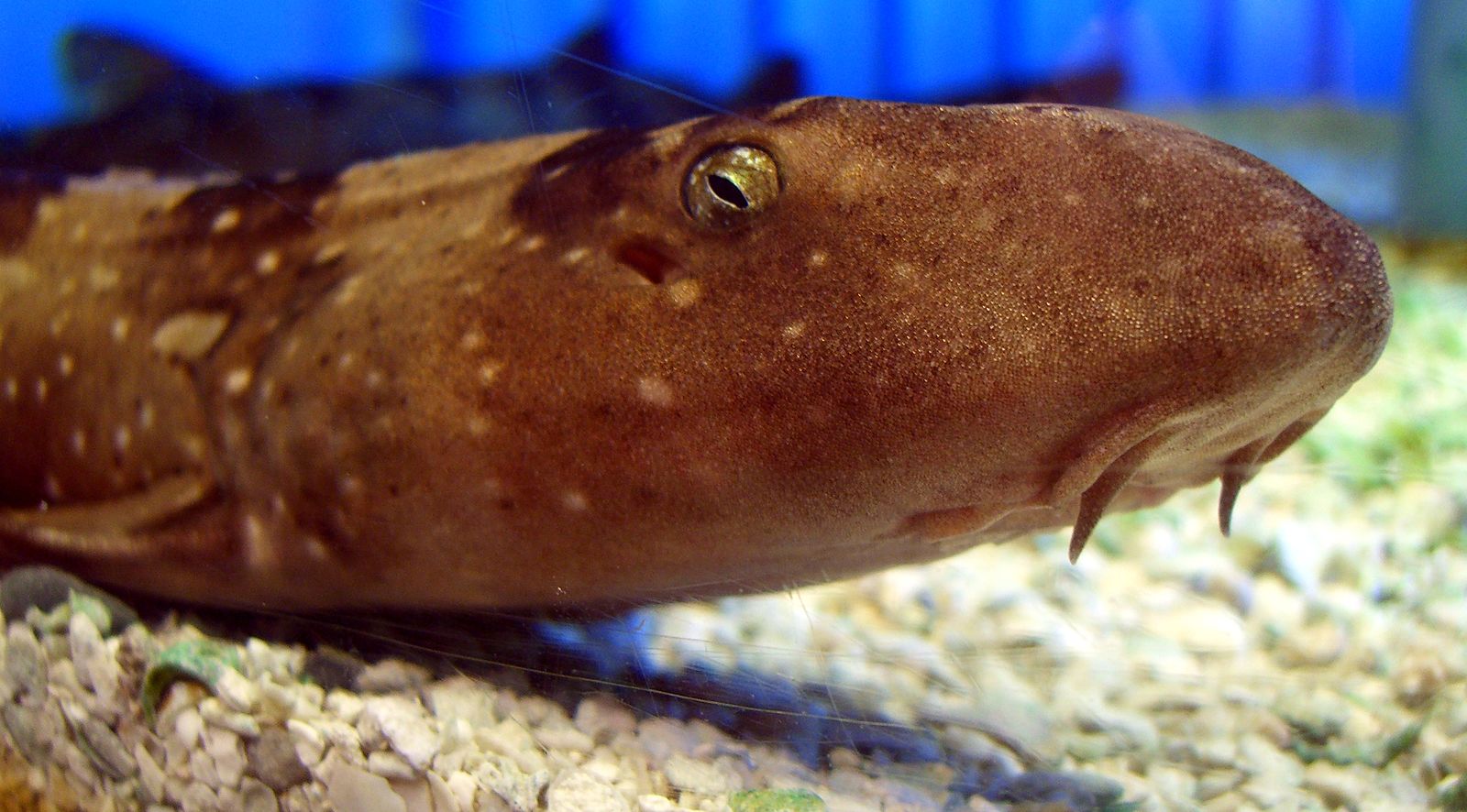
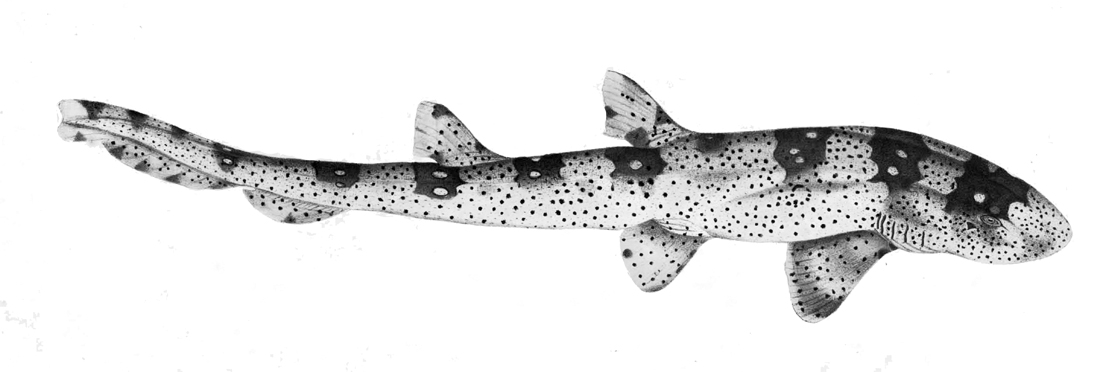
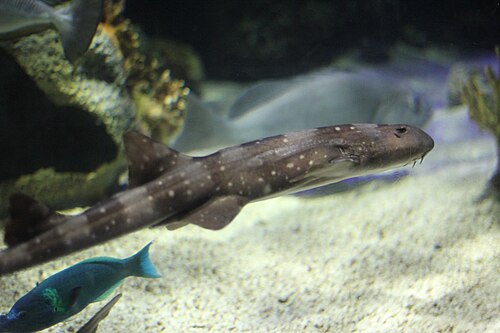
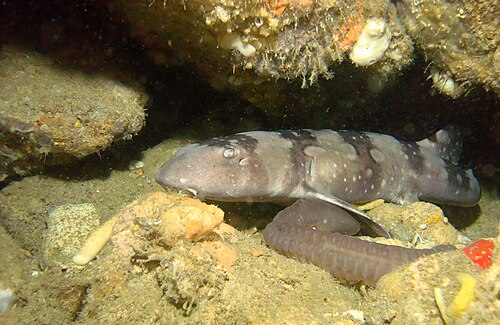
The Whitespotted bambooshark is a tropical reef-associated shark that is native to the Indo-West Pacific and found in India, Maldives, Papua New Guinea, Japan and Indonesia. This species is in the same family as the Carpet and Bamboo shark as well
Biology:
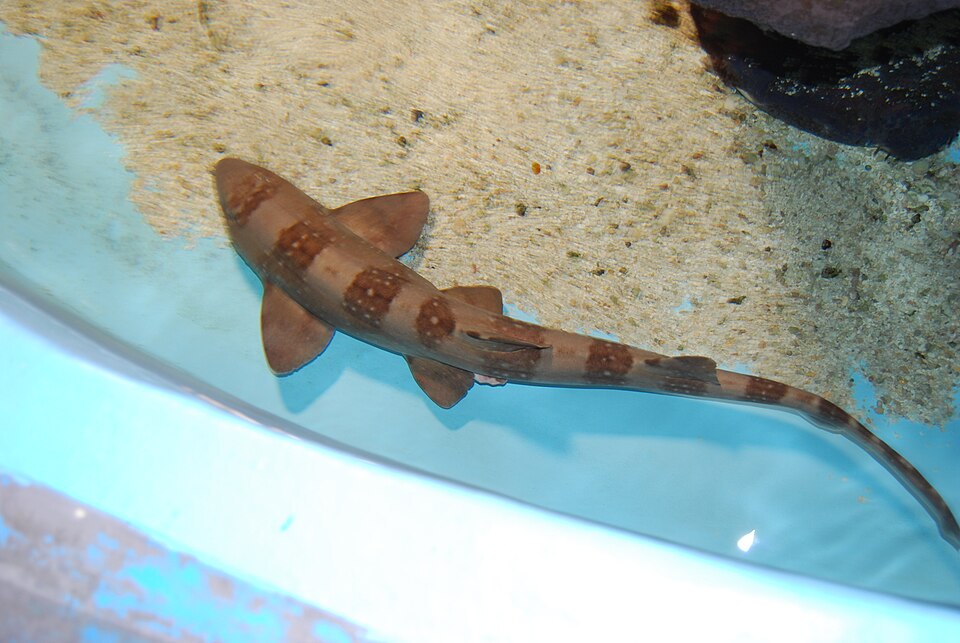
The Whitespotted bambooshark has dark bands horizontal around its body with many white or bluish spots as well. The max length of a Whitespotted bambooshark male is around 83cm/2.7ft and 95cm/3ft for females. The max reported age was about 25 years old.
Reproduction:
The young are produced by means of eggs that are hatched after they have been laid by the parent. During the development period inside the egg the embryos feed solely on yolk. The young are hatched In Taiwan hatching in June to August, at about 10-16cm (3.9 to 6.3 inches) in length. Females lay two egg capsules at a time, on average every 6 to 7 days with a hatching period range of 110 to 135 days. The Whitespotted bambooshark reaches sexual maturity in a range of 50 to 63cm (1.64 to 2.07 ft) in length.
Behaviour
The Whitespotted bambooshark is a bottom feeder shark that feeds on bony fish and others such as lobster, shrimp and crab.
The species is a bycatch of a range of artisanal and industrial gears including demersal trawl, longline, and gillnet. It is subject to intense and largely unmanaged fisheries across its range and is landed and utilized for food (although it is of low value) often in high numbers.
Fishing pressure is intense across the range of this species, yet it is still commonly landed in parts of its range; it is the most abundantly caught shark in parts of Taiwan, Malaysia, and Indonesia. There is no long-term trend data on the populations; general long-term shark population trends have shown declines of 37–99% over the past three generation lengths (27 years). The relative proportion of bamboosharks in shark landings has increased significantly over recent decades in the region, which may be in response to the overfishing of large sharks resulting in meso-predator release of this species. It is a relatively productive species and has not declined to the extent that other species have in the region. It is suspected that the Whitespotted Bambooshark has undergone a population reduction of 20–29% over the last three generation lengths (27 years) based on actual levels of exploitation, and it is assessed as Near Threatened (nearly meeting Vulnerable A2d).
There are no species-specific conservation measures currently in place. In Thailand, all commercial fishing vessels greater than 10 Gross Tonnage (GT) are prohibited to fish within three nautical miles from the shore (DoF 2015). Throughout Malaysia there are 51 Marine Protected Areas making up 5,462 km2 that may provide some refuge to this species (CTI 2020). In Indonesia, trawls were banned from use in 1980, however, mini trawls (Lampara) are still used throughout the country (Chong et al. 1987). In Taiwan, there is a prohibition on using any net fishing gear (e.g. trawls, seine nets) in 68 reef areas (Fisheries Agency 2019). Since 1999, all demersal trawling is prohibited within 3 nautical miles (nm) of the coast and within 12 nm for trawlers larger than 50 GT (Fisheries Agency 2019, Liao et al. 2019). Since the mid–2000s, gillnets have been banned within 3 nm in parts of five counties with a policy of gradual removal of gillnets from within 3 nm of the entire coast and government assistance to transition to line and troll fishing (Fisheries Agency 2019, Liao et al. 2019). This species may be protected in some of the ~32 Protected Areas which cover ~38% of the Taiwan coastline and ~47% of Taiwan territorial seas, with no-entry and no-take areas accounting for accounting for 0.9% and 4.6% of the territorial seas, respectively (MacKinnon et al. 2012, Fisheries Agency 2019, Liao et al. 2019). In China, since the late 1990s, regulations have specified varying annual seasonal fishing closures on commercial demersal trawling in the East and South China Sea to 12⁰N (Yu and Yu 2008). In 2018, this seasonal closure was widened to also include all other commercial fishing gears (e.g. gillnet and longline) (J. Zhang pers. comm. 28/08/2019). Some of the species range may be protected along the China coastline as it is estimated that ~20% of the coastline is included in Protected Areas (MacKinnon et al. 2012). Research is required to better define the population size and trends, and life history of the Whitespotted Bambooshark, and catch rates should be monitored.
Do you have images or videos of White-spotted Bamboo Sharks?
Submit them to [email protected].



Donate Now | Team Sharkwater Newsletter | Group Sales | Shark Database | #SharkFree
Contact Us | Press | Partners | Terms of Use | Privacy Policy
© 2026 Sharkwater Productions - The Truth Will Surface 🦈